
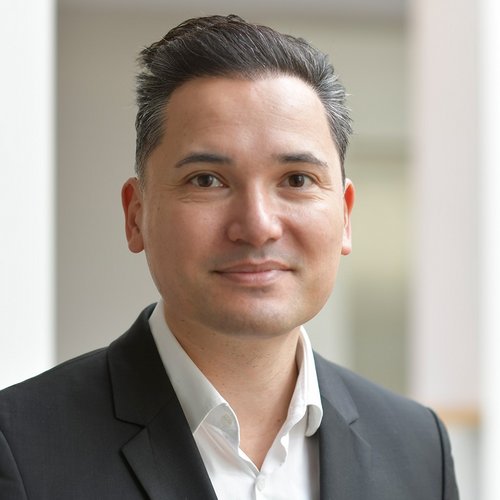
Interview | Prof. Surjo Soekadar | Head of the research division Translation and Neurotechnology at Charité – Universitätsmedizin Berlin
Prof. Surjo Soekadar is the head of the research division Translation and Neurotechnology at Charité - Universitätsmedizin Berlin and is regarded as a leading authority in the field of clinical neurotechnology. Last year, he received a grant for his research from the Einstein Foundation Berlin for the second time. His current Einstein Professorship is partially dedicated to the establishment of a NeuroTech Open Innovation Hub that enables start-ups and young teams of founders to validate their concepts. The hub is to be closely integrated with the newly founded ARC Innovation Center and the Berlin Institute of Health at Charité – Universitätsmedizin Berlin. We talked to Prof. Soekadar about the hub, the ARC and the arising opportunities.
1. What were your reasons for establishing a NeuroTech Open Innovation Hub and what are its aims?
When I started my research into the brain-computer-interface with Niels Birbaumer in Tübingen 20 years ago, there were maybe 20 working groups dealing with the topic throughout the world, meaning that you personally knew almost everyone who was conducting research in that area. Nils Birbaumer had already demonstrated the significance of the brain-computer-interface in the 1990s, so the pioneering work in this field originated in Germany.
Since then, the field has grown exponentially, much like AI. There are hundreds of work groups throughout the world now, and billions of US dollars are being invested into start-ups in the sector. However, not in Germany, but mainly in the USA and China. Over the past years, I have received quite a few offers from the USA as well as China. The story that we have seen with AI or MP3 Players is repeating itself: Initial concepts, prototypes and business models are developed in Germany, but they are scaled elsewhere. And I want to do something about that.
The NeuroTech Open Innovation Hub aims to persuade start-ups and young teams of founders to validate their innovations in Berlin at Charité. One goal is to validate the best and most innovative health care approaches at Charité; another is to let Charité participate in potential scaling and economic exploitation.
The hub enables stakeholders in the field of NeuroTech to network closely, recognize trends early and connect with investors, so that not only the validation but also the scaling of technologies will be possible in Germany.
2. In February, the ARC Center was founded at Charité. ARC is short for Accelerate, Redesign, Collaborate, and the center brings medical expertise, scientific research and technological development together under one roof, thereby shortening the path from concept to clinical practice. Before we talk about its connection to the NeuroTech Innovation Hub – what gave rise to the idea for the ARC Innovation Center?
All over the world, healthcare systems are under immense pressure right now. Burnout rates are alarmingly high, costs are skyrocketing everywhere – and in OECD countries, one in three doctors is over 55 years old. It is clear that we will not be able to maintain current levels of care if we don’t transform our healthcare system through innovation. And even though Berlin tops the German rankings for spin-offs, we are falling further and further behind internationally. Meanwhile, we are observing the opposite trend at the Sheba Medical Center in Tel Aviv, for example. It is the only hospital in Isreal that does not operate at a loss and has generated returns in the tens of millions from innovation over the past two years. In 2019, an ARC Innovation Center was established at the hospital, and this has made a major contribution to the positive development.
A key feature of this model is that staff members from all departments bring specific challenges from their daily clinical work to the ARC. The center collects and prioritizes these needs and supports the building of investable teams. Idea providers can get involved at operating level, but they are not obliged to do so. However, as application champions, they retain a stake in any startup that may result from their idea. A second key pillar of the model is open innovation, meaning collaboration with external partners, including regulators and investors.
3. What is the relationship between the NeuroTech Open Innovation Hub and the new ARC Center at Charité?
It all comes down to a happy coincidence: The development of a NeuroTech Open Innovation Hub was part of the second Einstein Professorship which I was awarded in the middle of last year. That was before the Charité board had decided to form a project group to establish the new ARC Center. Now that I have also been entrusted with setting up the ARC Innovation Center, these initiatives can be perfectly coordinated.
4. What are your next plans? Who can participate and in what way?
Open innovation means that we are rolling out the red carpet for start-ups and teams of founders and want to engage in a dialogue with them. There will be various types of meetups and a single point of entry, meaning a single point of contact for everyone interested. If we see potential for a successful collaboration, we will develop a project plan, for example, for the clinical validation of an initial prototype.
A start-up can support the non-exclusive validation at Charité through a donation to the Förderfonds Wissenschaft (Science Support Fund). Through the Einstein Foundation’s so-called matching funds mechanism, an additional 50 percent in public co-financing may be provided.
All stakeholders stand to benefit from this: Start-ups find out whether certain ideas and prototypes actually have the potential to be applied in a real clinical setting. Clinical staff get the opportunity to use innovative NeuroTech solutions and contribute to their further development. And patients benefit from the faster application of innovative approaches.
5. What role does Berlin’s HealthTech ecosystem – and in particular the Healthcare Industries Cluster – play in your work?
Berlin’s HealthTech ecosystem and in particular the Healthcare Industries Cluster are key to the success of my work. The cluster systematically brings academia, clinical practice, industry and startups together, thereby creating the necessary interfaces for innovation and translation. At the same time, it provides a strategic platform to connect projects, coordinate funding programs and strengthen the location’s international visibility.
Further information:
- Prof. Dr. Surjo R. Soekadar at Charité
- Second Einstein Professorship for Charité’s neurotechnologist Surjo Soekadar
- New ARC Center at Charité
Personal profile
Prof. Surjo R. Soekadar studied at the universities of Mainz, Heidelberg and Baltimore. In 2005, he earned his doctorate at the Central Institute of Mental Health (CIMH) in Mannheim. His subsequent career milestones included a research fellowship at the National Institute of Neurological Disorders and Stroke (NINDS) in Bethesda, Maryland, from 2008 to 2011. Prof. Soekadar led the research group for applied neurotechnology at the university of Tübingen from 2011 to 2018. In 2018, he became Germany's first professor of clinical neurotechnology at Charité – Universitätsmedizin Berlin.

