



Special Topic | The German Capital Region Drives the Future of Connected and Personalized Medtech
Companies here have been building medical hardware for more than a century: Ottobock’s Berlin roots go back over 100 years, and BIOTRONIK developed Germany’s first pacemaker here in 1963. Today, regional players pair hardware with digital features such as sensors, connectivity, and remote monitoring, moving toward personalized, patient-specific solutions.
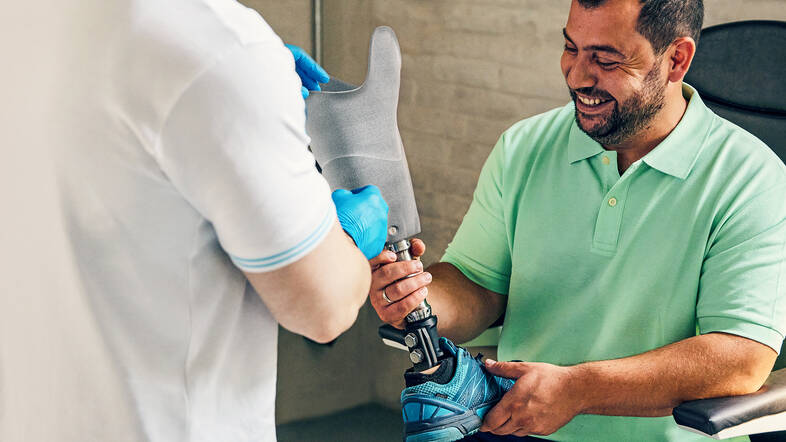
Designing for the individual patient
Personalization is becoming a defining feature of regional medtech. One example is a heart valve built from a patient’s own pericardial tissue, which is shaped and tailored using patient-specific 3D-printed stencils derived from MRI or CT data before being delivered by catheter. This personalized heart valve was developed by GrOwnValve, a Charité and German Heart Center of the Charité (DHZC) spin-off. DHZC implanted the first such valve in a human in June 2025; a larger safety trial is now recruiting. Because the valve is composed of living tissue, it has the ability to grow with the patient. This makes it especially suitable for children, for whom conventional replacement valves may require repeated operations.
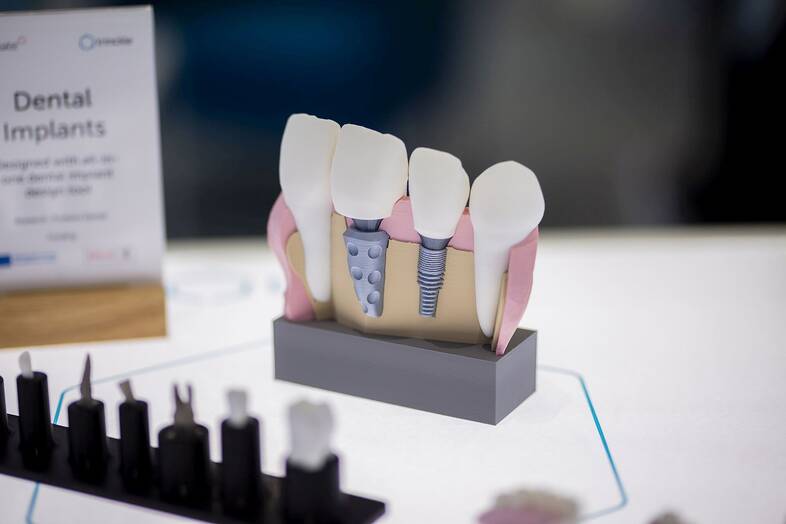
3D printing is one of the key technologies that drives this shift towards personalized solutions. Rather than relying on standard sizes, additive manufacturing creates implants and prosthetics that match a patient’s anatomy. In Berlin, trinckle 3D is applying the principle to dental care. Together with scientists at Charité and TU Berlin, the company has developed an automated digital workflow for the production of patient-specific tooth implants that replicate an individual’s root geometry.
Devices designed for children
Personalized, patient-specific solutions are especially important in pediatrics. After all, children’s anatomy is smaller, and they are still growing. Several device makers in Berlin and Brandenburg focus on designing implants and support systems specifically for the smallest patients. Berlin Heart’s ventricular assist devices remain the only ones of their kind for infants and small children with severe heart failure. They can bridge the wait for a donor organ. Another example is Potsdam-based Miethke, a global specialist in hydrocephalus treatment. The company develops shunt systems tailored to the needs of infants and children, helping manage a condition that often required lifelong care. Miethke works closely with Charité’s neurosurgery department.
Other companies focus specifically on childhood conditions. Cranioform trains clinicians at Charité in helmet therapy for infant skull deformities. CCtec, Berlin’s Deutsches Korsettzentrum, fits 2,000 to 2,500 scoliosis braces a year, mostly for children and teenagers, using body scans instead of plaster casts. Merete, well known for their hip implants, develops PediatrOS implants that correct leg-axis misalignment as children grow. Software is entering the field too: motus med, a Charité and BIH venture, uses smartphone video and AI to speed up diagnosis of infantile spasms.
Robotics moves toward routine care
In Berlin and Brandenburg, robotic assistance is rapidly moving from pilot projects into routine care. In 2025, the Universitätsklinikum Ruppin-Brandenburg became the first clinic in eastern Germany to introduce robotic knee and hip surgery. Charité’s Navigation and Robotics Laboratory has long run its own experimental operating room to test image-guided and robotic surgery before it reaches clinical practice. In 2025, the German Heart Center of the Charité (DHZC) built one of Europe’s largest robotic cardiac surgery programs within months, treating more than 260 patients by year’s end. The system, which was backed by the German Heart Center Foundation, supports surgeons with articulated instruments and three-dimensional visualization.
Berlin robotics research also gained a shared home in July 2025, when the Berliner Hochschule für Technik (BHT) opened its House of Robotics (Haus der Robotik). The research center houses BHT’s program for Humanoid Robotics, which has been running since 2018, alongside labs for soft robotics and human-robot collaboration, including work on industrial exoskeletons.
Digital tools and a growing start-up base
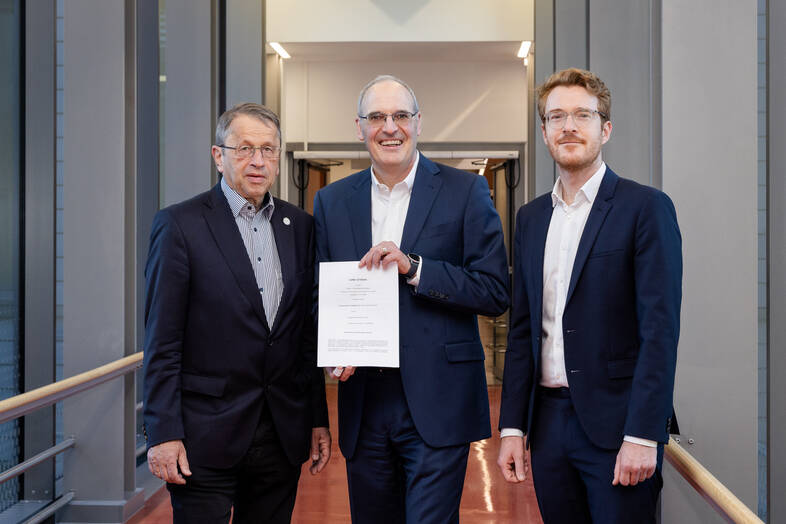
Digital innovation is reshaping cardiovascular care. BIOTRONIK has long combined implantable devices with remote monitoring and connected patient management. In May 2026, BIOTRONIK, together with Charité and the German Heart Center Foundation, announced a research partnership in digital and translational cardiology. It builds on inCareNet HF, the telemonitoring platform BIOTRONIK runs with Teltow-based GETEMED and the Berlin-base software firm SEMDATEX.
In Potsdam, the Hasso Plattner Institute’s Digital Health Cluster and the nonprofit data4life jointly run SensorHub. The initiative turns wearable and sensor data into research-ready datasets that are now used in data4life’s own D4L Collect tool.
Voices from the Ecosystem
Prof. Dr. Volkmer Falk , Chief Medical Director, DHZC, Director, Department of Cardiothoracic and Vascular Surgery, Chairman of the DHZC Divisional managers
"AI and robotic assistance open new opportunities for more personalized cardiac surgery. Combining patient-specific imaging with robotic precision could help us tailor interventions to individual anatomy and make minimally invasive treatment available to more patients. Berlin brings together the clinical and research strengths of Charité and its German Heart Center, the support of the German Heart Center Foundation and leading industry partners - a strong basis for future advances."

Selina Greuel, Co-Founder & CCO Insellar:
"At Insellar, we are building the first interface to the basal brain, making previously hard-to-reach brain regions accessible to treatment. Berlin gives us a unique combination of world-class science and clinical expertise, a thriving DeepTech ecosystem, and early-stage investors willing to back bold ideas. Support from IBB Ventures’ B# Pre-Seed Fund has been instrumental in helping us turn our vision into reality."
| Key players (selection) | |
|---|---|
| Organization | Focus Area |
| B. Braun | Infusion therapy, anesthesia, surgical care, infection prevention, and vascular systems for minimally invasive and surgical cardiovascular treatments. |
| Berlin Heart | Ventricular assist devices (VADs) providing mechanical circulatory support for infants, children, and adults with severe heart failure. |
| bess medizintechnik | Surgical implants and disposables for ENT, head and neck surgery, pulmonology and gastroenterology, including airway stents. |
| biotrics bioimplants | Regenerative implants for bone and soft tissue repair. |
| BIOTRONIK | Cardiac rhythm management, electrophysiology, neuromodulation, patient monitoring and remote monitoring systems. |
| Carl Zeiss Meditec | Ophthalmic diagnostics, surgical lasers and intraocular lenses. |
| Eckert & Ziegler | Radiopharmaceuticals, radionuclides and radiation therapy solutions for oncology and nuclear medicine. |
| FIAGON | Electromagnetic surgical navigation systems for ENT, neurosurgery and spine procedures. |
| Hologic | Mammography, breast biopsy, cervical health screening, molecular diagnostics and women’s health solutions. |
| Jenoptik | Berlin facility develops optical components and systems specifically for dentistry (intraoral scanners) and robot-assisted surgery. |
| Karl Storz | Endoscopy systems, surgical imaging and instrumentation. |
| Merete Medical | Orthopedic implants for hip revision, primary hip care and pediatric orthopedics. |
| MELAG | Sterilization, disinfection and instrument reprocessing equipment. |
| Novanta Medical | Insufflators, pumps, integrated operating room systems, and single-use tubing solutions for minimally invasive surgery. |
| OHST Medizintechnik | Design and manufacture of hip and knee implants, with contract manufacturing services for medical device companies. |
| Olympus Surgical Technologies | Medical endoscopes, endotherapy devices and surgical energy systems. |
| Osypka Medical | Cardiac electrophysiology and temporary stimulation devices. |
| Ottobock | Prosthetics, orthotics, exoskeletons and digital mobility solutions. |
| XION | Endoscopy systems and instruments for ENT, arthroscopy and laparoscopy. |
| Zimmer Biomet | Orthopedic implants for joint replacement, trauma and sports medicine. |
| Research institutes | |
| BAM | Materials testing, safety analysis and regulatory support for medical devices. |
| Charité – Universitätsmedizin Berlin & BIH | Translational medicine, clinical research and precision health. |
| Fraunhofer | Heinrich-Hertz-Institut (HHI), Institute for Reliability and Microintegration (IZM), Institute for Production Systems and Design Technology (IPK) and Institute for Open Communication Systems (FOKUS). |
| Helmholtz Hereon (Teltow) | Metallic biomaterials research for medical implants, including titanium and magnesium alloys for regenerative and degradable implant applications. |
| Hasso-Plattner-Institut | Digital health, health data science and patient-centered technologies. |
| PTB | Metrology, calibration and measurement standards for medical devices. |
| TU Berlin (FG Medizintechnik) | Mechanically oriented medical device development, with focus on rehabilitation aids, medical product reprocessing systems and minimally invasive instruments. |
Highlight Projects: Digital innovation
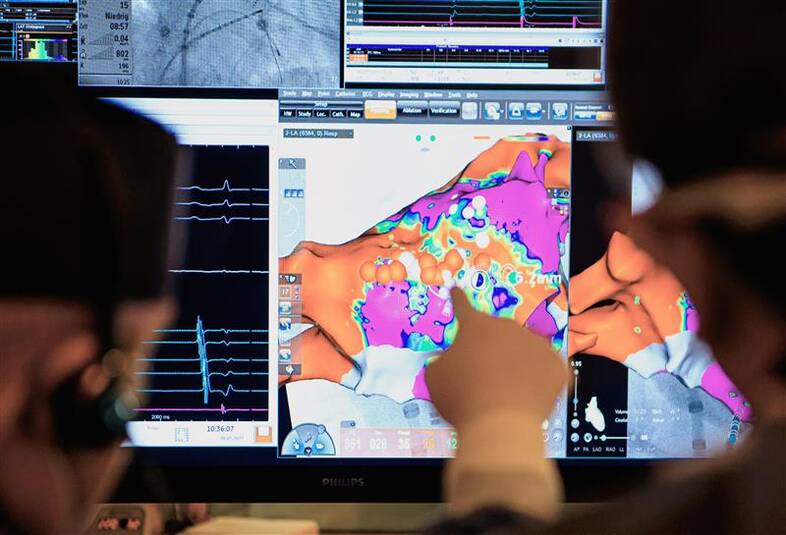
The Berlin Center for Gene and Cell Therapies (BC GCT) is set to become a key building block in Berlin’s ecosystem for advanced and personalized therapies. Following the groundbreaking in early June, construction is now underway at Bayer’s Berlin Nordhafen campus, located within the newly designated Zukunftsort Health Innovation Quarter Berlin-Mitte. The project is designed to bring research, development, and manufacturing closer together to accelerate the path from gene and cell therapy research into clinical use.
Backed by Bayer, ProBioGen, Charité and BIH, the center will provide modern laboratory space, GMP-compliant production facilities, and space for biotech start-ups developing new therapeutic approaches. Its aim is to further strengthen Berlin’s role in gene and cell therapy innovation in Europe and shorten the distance between early research and patient treatment.
A similar interdisciplinary approach can be found at the Hasso Plattner Institute’s Digital Health Cluster in Potsdam. The cluster brings together medicine and information technology, and it spans public health, health economics, computational genomics and data science. Its research covers a wide range of areas, including AI and machine learning in medicine, clinical data analysis, digital biomarkers, connected and context-aware health technologies, public health and the economics and regulation of digital health. Through research and teaching, the cluster contributes to the development of digital health technologies and the training of researchers in the field.
Future project: QuantumCardiology-AI

Prof Dr. Niels Wessel, Lead of the QuantumCardiology-AI project at Humboldt-Universität zu Berlin and MSB Medical School Berlin
"After three decades of basic research in magnetocardiography, I am convinced that the door to clinical translation is now open. QuantumCardiology-AI is our way through that door: quantum sensing of the heart's magnetic signals, combined with artificial intelligence, for earlier and more precise diagnosis - without contact, radiation or contrast agents. In East Asia, recent national programs are already pursuing this path with determination. The science is ready. Whether Germany and Europe now seize this opportunity, created here in Berlin, is a question of will."
The research project QuantumCardiology-AI combines quantum sensor technology and artificial intelligence to advance cardiac diagnostics. It was launched in November 2025 at Humboldt-Universität zu Berlin and MSB Medical School Berlin with the aim to diagnose cardiovascular disease earlier and more precisely. Using thousands of magnetocardiography datasets, the project trains deep learning models to recognize magnetic field patterns that remain undetectable with standard diagnostic tools. The goal is to develop non-invasive, near real-time diagnostic methods. The team is open to collaboration from clinics, industry and research to bring these methods into clinical practice.

