



Special Topic | Precision medicine on its way to the clinic
Precision medicine starts from a simple but significant idea: patients with the same diagnosis may need different treatments because their disease biology differs.
For most of the 20th century, drug development meant identifying a disease mechanism shared across a patient population, designing a compound to target it, and testing whether it works on average. That model still matters: broad-spectrum drugs remain essential for infectious diseases and multifactorial conditions where no single molecular target drives the disease process.
A strong ecosystem for pharmaceutical innovation
Drug development has deep roots in the Berlin Brandenburg region. Global players such as Bayer, Berlin-Chemie (Menarini), Pfizer, Sanofi and Takeda, along with 30 pharmaceutical companies, are based in Berlin Brandenburg, with around 13,000 employees in total. This industrial base is supported by a dense research landscape, which is at the same time increasingly engaged in precision medicine approaches: Charité – Universitätsmedizin Berlin, Berlin Institute of Health (BIH), Max Delbrück Center (MDC), and Berlin Institute for Medical Systems Biology (BIMSB).
The region benefits from close ties between hospitals, research institutes, biotech companies, and translational centers, and thus is creating an ecosystem designed to move advanced therapies more efficiently from the lab into clinical practice. This emphasis on translation is increasingly important as personalized therapies require highly specialized manufacturing, regulatory expertise, and close collaboration between academia, clinics and industry.
Precision medicine, by contrast, builds on molecular profiling, data integration, and biomarker-driven patient stratification. This shifts the unit of analysis from disease category to individual molecular phenotype. Tumor profiling for actionable mutations is now routine in many oncology settings. Proteomic and metabolomic signatures are being explored as early-risk biomarkers in cardiovascular medicine. Multi-omics approaches are helping resolve rare and undiagnosed diseases where classical diagnostics fall short.
Spatial omics as a core technology
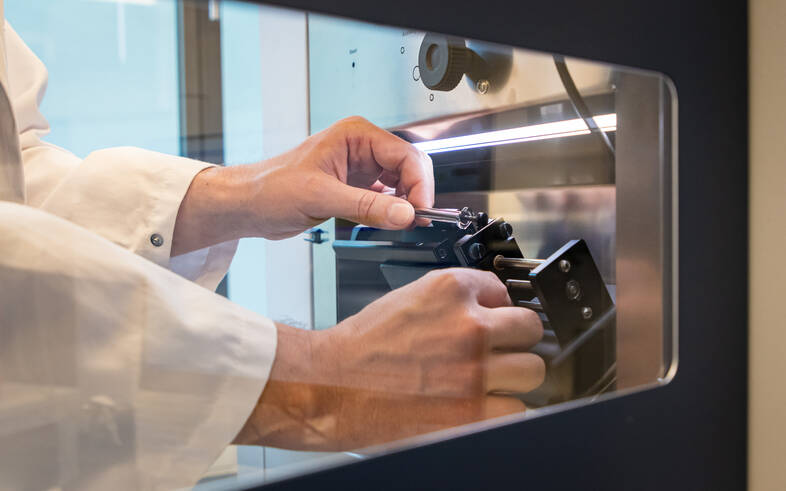
Spatial omics has become one of the key technologies for precision medicine because it adds tissue context to molecular data. By linking omics data to cellular architecture, it supports biomarker discovery, stratification, and target validation in disease settings where spatial organization matters as much as the molecular signature itself, for example, in cancer and inflammatory diseases. Clinical use is still limited, but the field has moved beyond proof of principle and into translational development.
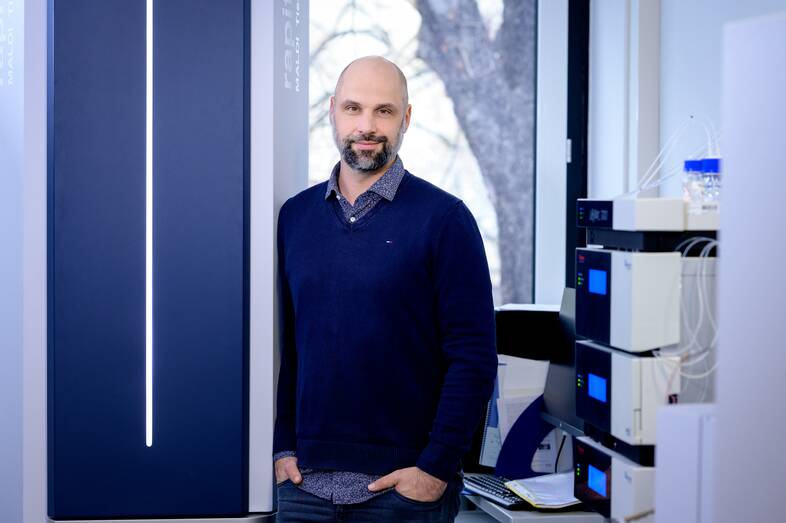
In Berlin, several groups are helping drive the field forward. Oliver Klein and the BIH Imaging Mass Spectrometry Unit at Charité are advancing imaging mass spectrometry, enabling the mapping of proteins, metabolites, and other molecular features directly in tissue sections. Building on this work, the Spatial Diagnostics Platform at the Berlin Institute of Health (BIH) at Charité is bringing together genomics, proteomics, and spatial tissue analysis in an automated, AI-supported workflow to make complex molecular information more accessible for clinical decision-making.
On the single-cell and spatial biology side, Nikolaus Rajewsky's lab at MDC-BIMSB has pioneered high-resolution spatial transcriptomics technologies, including the Open-ST platform for spatially resolved gene-expression analysis. Complementing these efforts, the MDC-Bruker Center of Excellence for Single Cell Omics focuses on developing and applying mass-spectrometry-based single-cell and multi-omics workflows.
From research to clinical application
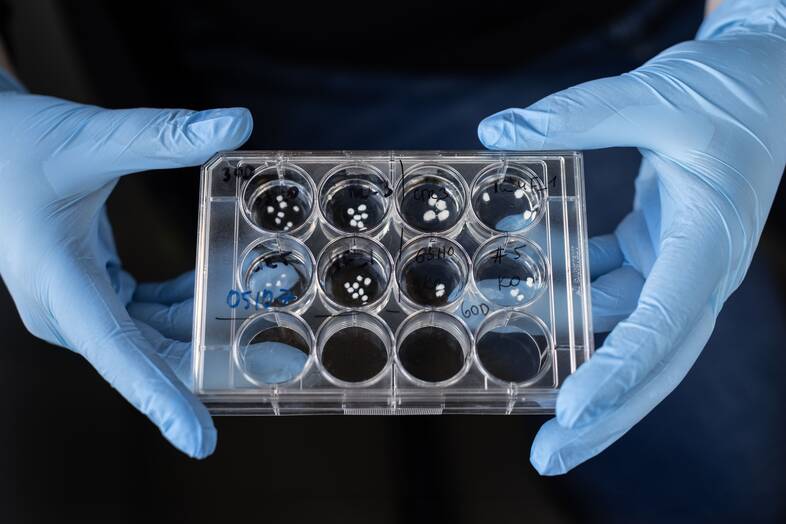
Moving precision medicine from the lab to the patient requires more than data. It requires computational tools to interpret that data, and disease models that reflect human biology closely enough to be predictive.
On the computational side, BIH/Charité, the Berlin Institute for Medical Systems Biology (BIMSB), and the MDC have built strong capacity in computational and systems biology, integrating high-throughput molecular data with mathematical modeling and bioinformatics to generate quantitative, testable models of disease.
The MDC-BIMSB is now also home to the Einstein Center for Early Disease Interception (EC-EDI), which brings together researchers from twelve Berlin institutions to apply single-cell multi-omics technologies, AI modeling, and patient-specific organoids to the study of disease in its earliest stages. Initial focus areas include respiratory and neurological diseases, Alzheimer’s disease, and multiple sclerosis. The region has also built a coordinated infrastructure for human-based, animal-free research. Charité 3R funds internal research projects focused on replacing, reducing, and refining animal use. The Einstein Center 3R, a multi-institutional initiative founded in 2021, receives funding from the Einstein Foundation to develop 3D human tissue models as alternatives to animal experiments, covering six organ systems.
Si-M is a visible example of this direction. Opened on April 22, 2026, Der Simulierte Mensch is the first research facility in Germany specifically designed for the simulation of human organ function without animal testing. Around 150 researchers from TU Berlin and Charité work together, combining organ-on-chip systems, 3D cell cultures, bioprinting, and advanced imaging to model human physiology from the molecular to the tissue level.
Enabling technologies
Precision medicine depends on enabling technologies that measure disease earlier and with greater precision. Among them are highly sensitive sensor platforms, liquid biopsy for minimally invasive molecular profiling, as well as AI and machine learning tools that help interpret complex omics datasets in clinical context.
At MDC, the Center for AI-Accelerated Molecular Innovations in Medicine (AI2M) is set to strengthen Berlin's precision-medicine ecosystem. Backed by substantial funding from the Helmholtz Association, it will operate from two hubs: the Spatial and Single-cell Biomedicine and AI hub at MDC-BIMSB in Mitte and the Human Cell Model and Bioengineering hub in Buch. The center is designed to develop AI models for large molecular and clinical datasets and to support precision treatment and prevention. Construction begins in 2026.
The region also has a strong base in innovative sensors, including ultrasensitive immunoassays, electrochemical biosensors, lab-on-chip and microfluidic systems, and mass spectrometry-based platforms.
Three questions to…
Dr. Oliver Klein (BIH)
1. What is the Spatial Diagnostics Platform, and why was it created?
The Spatial Diagnostics Platform (SDP) at the Berlin Institute of Health (BIH) at Charité is designed to make complex information from patient tissue samples more useful for clinical decisions – faster, more comprehensively, and more precisely. At its core is the spatial analysis of genes, proteins, and cells, with the goal of developing automated, AI-supported, and scalable diagnostics. Together with industry partners, including Roche Diagnostics, Zeiss Industrial Quality & Research (IQR), Bruker Daltonics, and Hamilton Germany, we are combining research, clinical practice, and technology development. LIMAA Technologies complements this effort with technologies for tissue-preserving analysis and for later transfer into clinical use.
2. Why is it important for diagnostics to consider molecular information in the spatial context of tissue?
Because we need to know not only which molecules are present, but also where they are located in the tissue and how they interact. Spatial multi-omics combines genomics, proteomics, and spatial tissue information, enabling a much more comprehensive picture of disease. Working with our industry partners, these different technologies can be integrated into a single, automated workflow. In the longer term, we aim to translate molecular information more quickly into actionable treatment decisions.
3. What makes Berlin a suitable location for the SDP?
Berlin brings together excellent research, clinical care, technology development, start-ups, and industry in a comparatively small area. With BIH and Charité, along with our technology and industry partners, we have gathered the key actors in one place. As a result, rather than developing new technologies in isolation, we can directly link them to clinical questions and later industrial implementation.

Omar El Nahhas (StratifAI):
"When building a category-defining company that is reimagining how cancer patients globally get personalized treatment recommendations, you cannot follow the crowd. This is what Berlin stands for and always has: a place with people who challenge the status quo, free-thinkers who do not settle for what's easy but pursue what needs to be done to build the future."

Prof. Peter Robinson (BIH):
"With the help of AI, it will be possible to apply precision medicine to most diseases in the coming decades."
Gender-based medicine
Gender-based medicine examines how sex and gender influence the disease mechanisms, its symptoms, diagnosis, treatment and management, including how patients cope with illness. Berlin has taken on a pioneering role in this field. It was shaped by cardiologist Prof. Dr. Vera Regitz-Zagrosek who held the first German Professorship on Gender in Medicine, established at Charité in 2003. She also founded Charité’s interdisciplinary Center for Gender in Medicine, today operating as independent institution within Charité.
Berlin is growing into a leading hub for addressing the gender health gap through research, technology development, education and clinical practice. Further aspects of diversity, including age, sociocultural background and ethnicity are increasingly incorporated into the concept of gender-sensitive health. A research group led by Professor Gertraud (Turu) Stadler at Charité developed a Diversity Minimal Item Set to support the regular and standardized collection of data on gender and other diversity dimensions.
Charité and the Berlin Institute of Health (BIH) are partners in the GenDiMedNet project, which aims to systematically collect, harmonize, and analyse research data while consistently integrating both biological sex and sociocultural gender perspectives. GenDiMedNet serves as a network and accompanying research centre that provides scientific coordination in the areas of data management, communication, and translational research for eight technology projects focused on sex- and gender-specific aspects of diagnosis and treatment. Researchers from Charité and Berlin-based companies are involved in four of these eight technology projects.
Highlight Project:
Einstein Center for Early Disease Interception
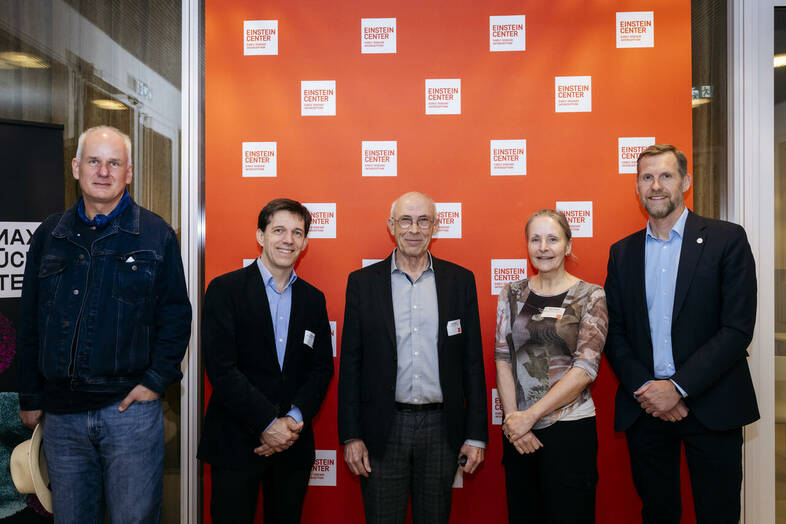
The Einstein Center for Early Disease Interception (EC-EDI) was inaugurated in March 2026 at the MDC’s Berlin Institute for Medical Systems Biology in Mitte. The center brings together researchers from twelve Berlin institutions, including Charité, MDC, BIH, Berlin's three major universities, and several Max Planck Institutes. Its goal is to detect and intercept disease before symptoms appear. Key technologies include single-cell multi-omics, spatial biology, patient-specific organoids, 3D bioprinting, and AI-based modeling of disease mechanisms and trajectories. The Einstein Foundation Berlin funds the center with €6 million. Additional support for recruiting young international researchers comes from the state of Berlin.

