


Special Topic | Growing into a neurotech hub
The German capital region combines excellent neuroscience, several clinically leading university hospitals, a growing transfer infrastructure and a start-up scene that attracts substantial investment. Together, these give Berlin Brandenburg the pieces needed to carry neurotech from early research through clinical testing to commercialization and market adoption.
This article is part of the Life Sciences Report Berlin Brandenburg 2026/2027. The full report can be found HERE.
Interdisciplinary collaboration in neurotechnology
Progress in neurotechnology depends on collaboration across disciplines. Clinical medicine contributes to the understanding of neurological conditions and therapeutic needs. Engineering, computer science, photonics and microelectronics provide the technologies required to measure, interpret and modulate activity across the brain and peripheral nervous system. Together, these fields enable the development of new approaches that can move from laboratory research into clinical practice.
The successful development and large-scale adoption of neurotechnologies require close collaboration across a broad range of high-tech industries. This is where the German capital region excels. Berlin Brandenburg brings together world-leading research institutions, global industry players, innovative start-ups, and well-connected cross-sector networks. The region's expertise in life sciences & healthcare, photonics, microelectronics, quantum technologies, digital and AI solutions creates an ideal environment for developing, testing, and commercializing next generation neurotechnologies.
A strong research base
The region’s neuroscience base is anchored by Humboldt-Universität zu Berlin, Charité – Universitätsmedizin Berlin, the Bernstein Center for Computational Neuroscience, the Einstein Center for Neurosciences and the German Center for Neurodegenerative Diseases (DZNE) site in Berlin. Together, these institutions address a wide range of scientific questions, from computational models of brain function to the mechanisms of dementia and other neurological diseases.
NeuroCure, the long-standing interdisciplinary network at Charité, has recently entered a fourth funding phase under the Excellence Strategy, with support continuing through 2032. The Cluster of Excellence aims to better understand disease mechanisms, strengthen local research networks and support new research groups and technological platforms.
The connection between research, clinical practice and innovation is also reflected in the work of Prof. Surjo R. Soekadar, Einstein Professor of Clinical Neurotechnology and Head of the Research Division for Translation and Neurotechnology at Charité – Universitätsmedizin Berlin. His work in clinical neurotechnology focuses on moving neurotechnological approaches into patient care, including brain-computer interfaces, neuromodulation and digital health solutions. As Chief Innovation Officer of the Charité, Prof. Soekadar, alongside Managing Director Avner Shahal, is responsible for establishing the new BIH ARC Innovation Center (CBAIC) and its NeuroTech Open Innovation Hub. The hub is intended to connect researchers, clinicians, start-ups and investors around concrete neurotechnology projects, with the goal of accelerating their translation into clinical practice and real-world healthcare applications.
Sensors, therapy and transfer
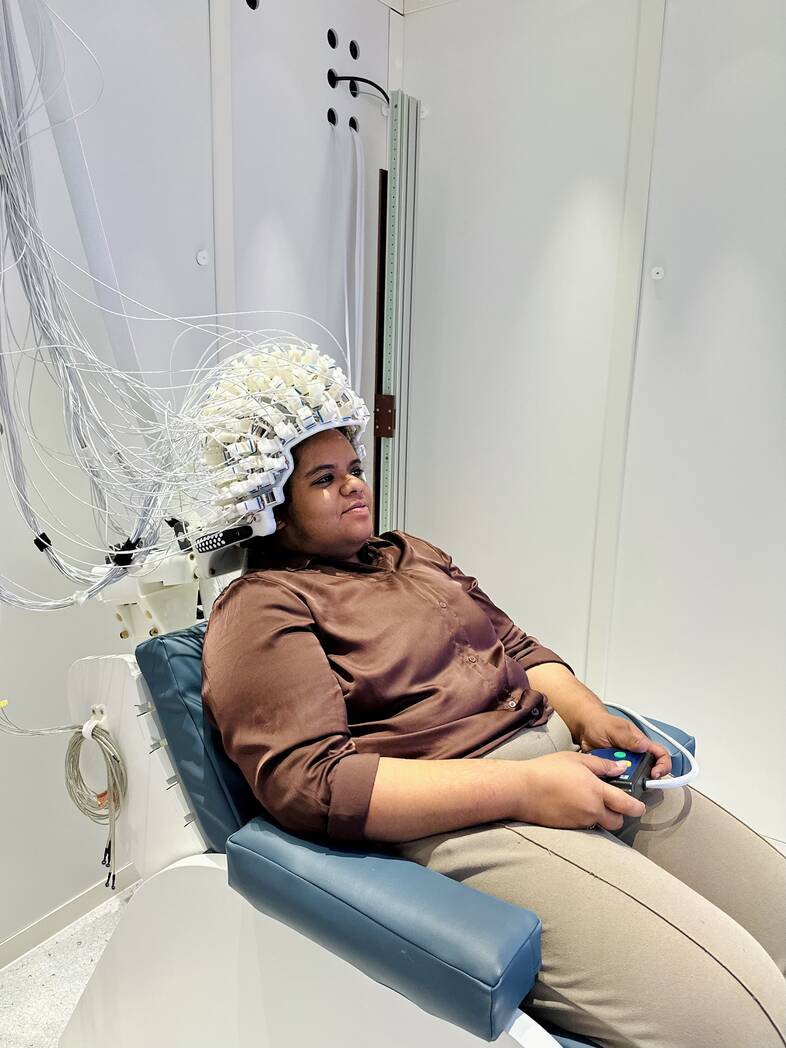
The OPM-MEG Center demonstrates how quantum metrology is entering clinical neuroscience. Charité and the Physikalisch-Technische Bundesanstalt (PTB) opened the center for biomagnetic brain research in 2025. In clinical neuroscience, a new type of high-sensitivity quantum sensors, the so called optically pumped magnetometers (OPMs), enable the measurement of the brain‘s tiny magnetic fields with high temporal and spatial resolution. Because the sensors operate at room temperature and can be used during natural movement, the technology opens up new possibilities for studying Parkinson’s disease, epilepsy and psychosis.
The Charité BIH ARC Innovation Center, opened at Charité in 2026, extends this same translational mindset into Berlin Brandenburg’s start-up scene. It serves as an accelerator for research on its way into clinical practice.
Investor interest is gaining momentum: Insellar secured €400,000 in pre-seed backing from IBB Ventures’ B# fund. The company is developing a brain-computer interface for severe depression and will use the funds to build a functional prototype. Nuuron raised a €3.5 million seed round led by HTGF for its “memory pacemaker”, a non-invasive, photonic neurostimulation for dementia patients.
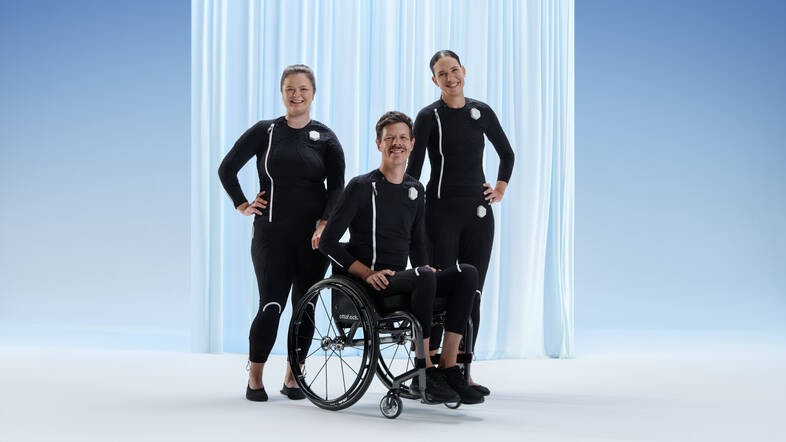
Several well-established medtech companies are already active in this space. BIOTRONIK’s portfolio includes the Prospera Spinal Cord Stimulation system for chronic pain. Ottobock has developed the exopulse suit, designed to reduce spastic symptoms and pain in conditions such as cerebral palsy and multiple sclerosis.
Meeting points for the neurotech community
A packed event calendar helps keep the ecosystem visible and connected. ANT Neuromeeting brings researchers, clinicians and industry together in Berlin every year, while the Berlin Neuroscience Meeting returned in 2026 for its ninth edition. The 14th MindBrainBody Symposium is scheduled for March 2027 both in Berlin and online, giving the region another interdisciplinary platform for exchange on brain research and related technologies.
Key players (selection)
| ANT Neuro | High-density EEG, neuronavigation, and neuromodulation systems for research and clinical use. |
| Biotronik | Neuromodulation solutions for chronic pain, including spinal cord stimulation and remote patient monitoring. |
| eemagine Medical Imaging Solutions GmbH | B2B neurotech development and manufacturing of EEG, TMS, and neuronavigation systems. |
| InnoSphere | Home-based, non-invasive brain stimulation devices for ADHD and cognitive disorders. |
| Insellar | Minimally invasive brain-computer interface for targeted stimulation in major depressive disorder. |
| NIRx | Near-infrared brain imaging systems and software for research and neurofeedback. |
| Nocturne | AI-based retinal imaging to diagnose and monitor neurological diseases. |
| Nuuron | Non-invasive photonic “Memory Pacemaker” digital therapy for Alzheimer’s disease. |
| Ottobock | Prosthetics, neuro-orthotics, and exoskeletons with digital solutions for neurorehabilitation. |
Research institutes
| Charité – Universitätsmedizin Berlin | Clinical neuroscience, brain–computer interfaces, and non-invasive neuromodulation for neurological and psychiatric disorders. |
| Berlin Institute of Health in der Charité (BIH) | Translational research hub advancing precision medicine, including neurotechnology for brain diseases. |
| Max-Delbrück-Centrum für Molekulare Medizin (Max Delbrück Center) | Molecular and systems neuroscience research on brain function, circuits, and neurodegeneration. |
| Humboldt-Universität zu Berlin | Academic neuroscience and computational neuroscience. |
| NeuroCure (Exzellenzcluster) | Excellence cluster for mechanisms and therapies of neurological and psychiatric disorders. |
| Bernstein Center Computational Neuroscience | Computational and cognitive neuroscience across scales, from synapses to brain systems. |
| Einstein Center for Neurosciences | Interdisciplinary umbrella fostering neuroscience collaboration, training, and visibility in Berlin. |
| Leibniz-Forschungsinstitut für Molekulare Pharmakologie (FMP) | Molecular pharmacology targeting neurodegeneration and brain-related disease mechanisms. |
| Intelligent Biomedical Sensing (IBS) Lab | Wearable multimodal neurotech (fNIRS, EEG) with ML for everyday brain–body monitoring. |
| Deutsches Zentrum für Neurodegenerative Erkrankungen (DZNE) | National research on causes, prevention, and treatment of neurodegenerative diseases. |
| Fraunhofer-Institut für Zuverlässigkeit und Mikrointegration IZM | Microelectronics and system integration for neurotech devices, sensors, and implants. |
Voices from the Ecosystem
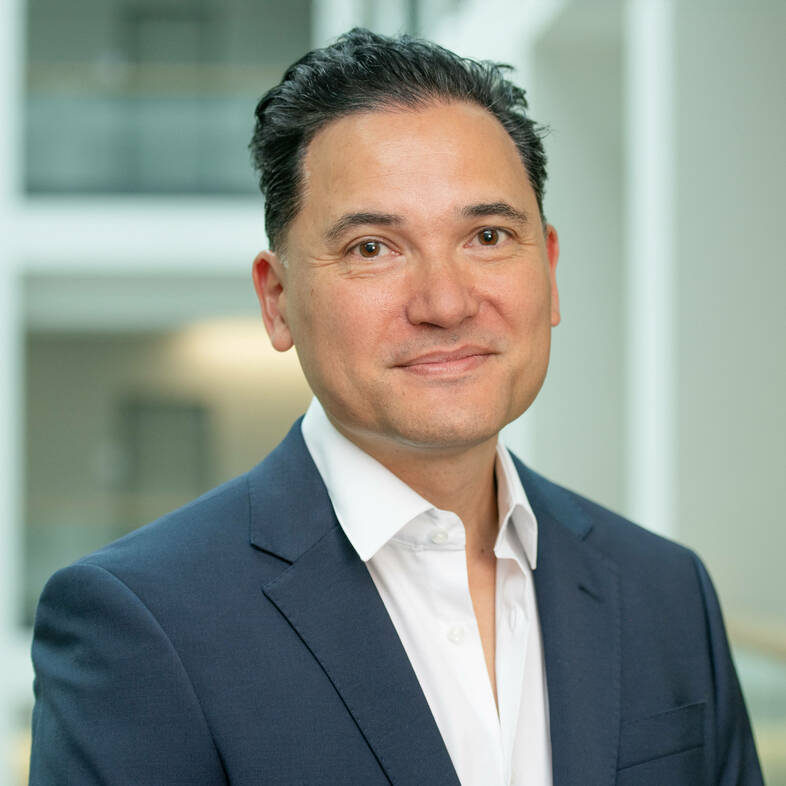
Prof. Surjo Soekadar, Head of research division Translation and Neurotechnology, Head of research group Clinical Neurotechnology, Charité - Universitätsmedizin Berlin
"Our research focuses on integrating next generation quantum sensing with novel neuromodulation technologies, including temporal interference magnetic stimulation, to create bidirectional brain-computer interfaces. We believe this convergence will enable a new generation of precision therapies for neurological and psychiatric disorders.“
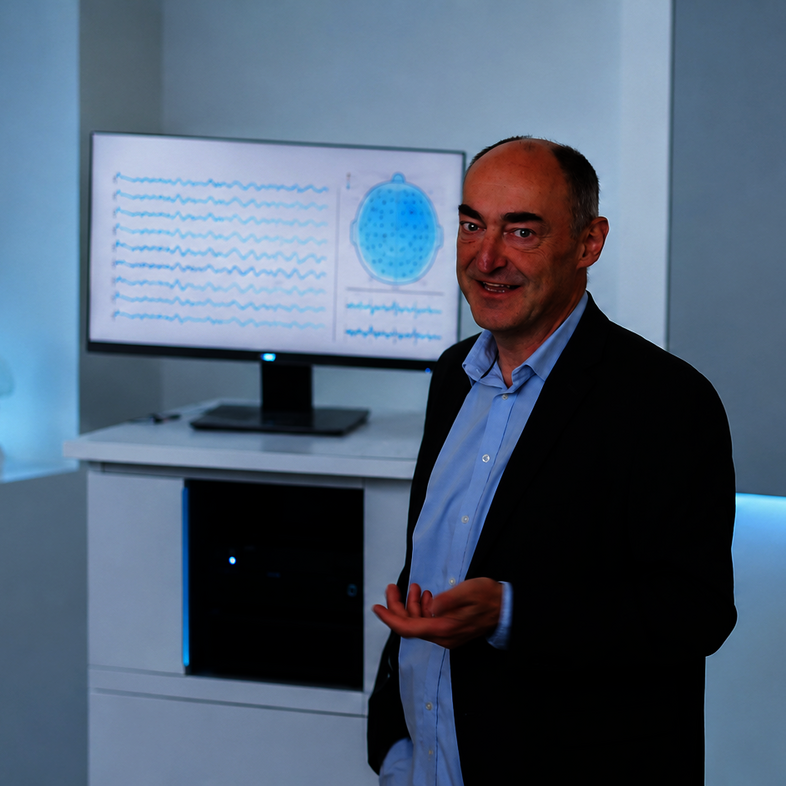
Dr. Frank Zanow, Founder and CEO of eemagine and ANT Neuro
“As a developer of neurotech solutions and Medical Device Manufacturer, we benefit from Berlin's unique ecosystem, one where neuroscience innovations can truly take root. Here, we are close to many of our academic and clinical partners, and the city itself is attractive particularly to international talent.”

Fabian Queisner, Founder and CEO of Nuuron
"Nuuron is well on its way to developing what may become one of the first true Digital Drugs for Alzheimer’s disease: an at-home neuromodulation therapy based on our proprietary technology. While no molecule is involved, our approach aims to deliver therapeutic effects through precisely engineered neurostimulation. From the very beginning, the outstanding neurotech research environment around Charité has been the ideal place to develop our start-up."
Highlight Project: OPM-MEG Center
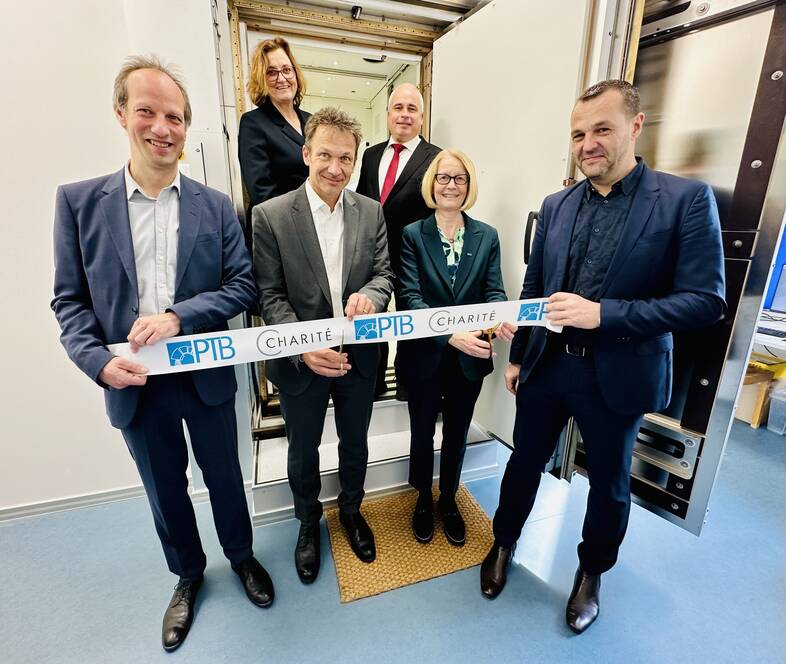
Jointly run by Charité – Universitätsmedizin Berlin and the Physikalisch-Technische Bundesanstalt (PTB), the OPM-MEG center brings together complementary expertise from both institutions. PTB oversees the biomagnetic measurements using its quantum sensors, while Charité applies the technology to neurological and psychiatric research. At its core is a magnetoencephalography (MEG) system built from around 100 optically pumped magnetometers (OPMs), supported by a joint national research grant and housed in a dedicated magnetically shielded chamber procured by PTB. Located on Campus Charité Mitte, close to patients, the center also serves as a testbed for qualifying PTB’s quantum sensor systems for industrial use and regulatory approval.
Future project: NeuroTech Open Innovation Hub
Charité BIH ARC Innovation Center (CBAIC) has launched the NeuroTech Open Innovation Hub, a clinically grounded platform for the responsible development, validation, and scaling of neurotechnology across medical and consumer applications. The hub was created in response to a persistent European scaling gap. While Europe produces strong research output, funding remains fragmented and commercialization pathways are weak. A largely unregulated consumer segment adds to the challenge. The hub’s structured innovation platform for science, clinical practice, industry, and policy seeks to address these issues. The NeuroTech Hub targets start-ups, clinicians, investors, regulators, and patient communities; its services span stakeholder access through community and corporate councils, ecosystem matchmaking, public-private matching funds via the Einstein Foundation Berlin, and product evaluation including a Charité Seal of Quality and EU Seal of Trust readiness. With the hub, Charité aims to establish Berlin as a leading hub for responsible neurotechnology.

