Special Topic | “Prevention and Patient Empowerment – Your Ideas for a Healthier Future” – The Barcamp Health Innovation for the Healthcare of Tomorrow.
“Prevention and Patient Empowerment – Your Ideas for a Healthier Future” was the motto of this year’s edition the traditional Barcamp Health Innovation organized by HealthCapital, the Healthcare Industries Cluster Berlin-Brandenburg.
Once again, the Barcamp provided a platform for the interdisciplinary exchange about innovative healthcare solutions. This year’s 14th edition focused on the question of how we can actively promote health and empower people to handle their health autonomously. In the face of demographic change and the ever-rising costs of medical treatments, prevention is becoming increasingly important at individual level and for the shaping of living conditions. A central component of modern prevention strategies is patient empowerment, i.e., the strengthening of individual health literacy.
“Prevention is the key to sustainable healthcare for all Berliners. We focus on integrated services, digital support and low-threshold access, including in neighborhoods, to empower people to actively shape their healthcare and live and work better and healthier. Prevention is an investment into the quality of life that everyone has to make. Only together can we prevent disease and enshrine genuine health literacy in the city,” Berlin Health Senator Ina Czyborra comments on the topic.
The participants design the program
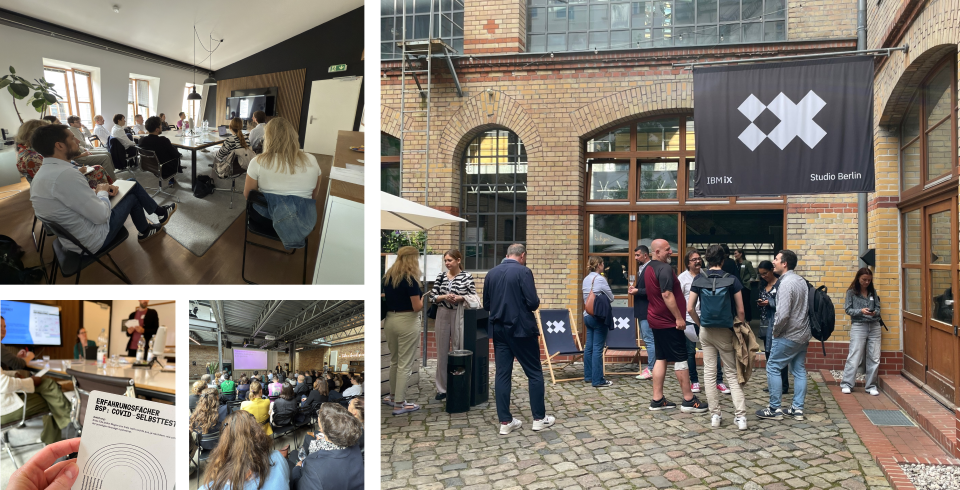
This year’s Barcamp Health Innovation took place on July 8 in Berlin and was jointly organized by HealthCapital, Techniker Krankenkasse, IBM iX and Bayer. The main goal was to develop proposals, approaches and ideas on the further improvement and advancement of prevention and patient empowerment.
What is special about the Barcamp is that its agenda is designed by the participants from the industry, science and healthcare sectors. All interested parties pitch a topic or question and those present vote for their favorites. The topics that win most votes are then explored in depth in sessions led by the parties that provided the ideas.
A total of eighteen ideas to examine the topic of prevention from different angles were pitched by start-ups, established companies and academia. After the audience vote, roughly 90 participants discussed various ideas and approaches for a healthier future in 12 sessions. A particularly large number of projects focused on mental health, gender-sensitive medicine and digital platforms for better health management. Topics included AI-supported technologies for promoting health literacy, virtual reality solutions for mental health and stress management as well as ways of integrating support measures for women going through menopause into occupational health management programs.
“The Barcamp Health Innovation provided an excellent platform to discuss two of the most important aspects of modern healthcare: prevention and patient empowerment. This is precisely the approach we are following at Sanofi, and that is particularly evident in our commitment to type 1 diabetes, where we are working to promote early detection of the disease, so no one suffers serious health complications due to delayed diagnosis. Innovative screening programs and education about the various stages of the disease enable those affected to take action at an early stage. This is a perfect example of how prevention and patient empowerment can go hand in hand,” said Sanofi representatives MD Lisa-Marie Köhler, Medical Science Liaison, and Boris Graf, Public Affairs Lead Autoimmune T1D. They led a session on the topic of improved detection of type 1 diabetes.
Examples from the capital region
In Berlin-Brandenburg, there are numerous players dedicated to prevention and patient empowerment, many of whom are already operating successfully in the market. For example, US company Significo develops health software in Berlin on behalf of its customers. Among other things, this software enables the monitoring of critical health parameters and, based on this, the provision of recommendations using machine learning. With its product Recco, Significo offers AI-supported health consulting that other companies can integrate into their prevention programs or digital health solutions.
Aniva Health, a company based in Berlin, examines more than 140 biomarkers in the blood of interested parties. Based on this, Aniva Health offers customized dietary supplement packages and personalized action plans every month. The action plans are created in collaboration with scientists and AI. They include, among other things, recommendations on daily habits, nutrition and sleep.
The focus of tio health is the health literacy of parents with regard to their children. The company’s credo is Verstehen statt googlen (Get educated instead of googling). The Berlin-based start-up is developing an app designed to accompany parents through their children's early years. Intelligent assessments and weekly prompts are provided based on age, environmental data, behavior and daily routine. A health diary visually links symptoms, sleep, emotions and developments. The app, which is currently under development, is also intended to support doctors and insurance companies through features such as a structured preliminary medical history or anonymized data collections for medical research.
The use of virtual reality (VR) for mental health promotion is the priority of magic horizons and Neuropilot. magic horizons' VR software is designed to minimize the risk of burnout and offers virtual nature experiences, guided meditations, breathing exercises and more. Meanwhile, Neuropilot focuses on the mental health of executive staff and professional athletes. In the future, the application is also to be used in rehabilitation and to support mental health in a broader work context. VR therapy involves short, individually tailored sessions designed to alleviate symptoms of anxiety and depression.
Focus on women’s health
A growing number of players in the capital region is dedicated to the topic of women’s health. During the Barcamp, the audience voted for three of them to lead a session:
FEMNA Health offers at-home lab tests to give women greater insight into their hormone and nutrient levels. Based on the test results, women can then receive the micronutrients they specifically need. The offer also includes personal advice and support. Eva von Ditfurth-Brandt, Chief Operations Officer, was pleased that FEMNA Health could organize a session on the topic of “Improved healthcare for women”. “We at FEMNA really benefited from being part of this special format. The Barcamp provides a space for genuine exchange, creative inspiration and new connections – exactly what is needed to rethink health. We are particularly pleased that the topic of women's health and gender-sensitive medicine was highlighted and found its place in the program. Because only when we consider all perspectives can we work together to shape sustainable, holistic healthcare,” she stated.
Hermaid, a company founded in Berlin in 2023, focuses on the topic of menopause. The Hermaid-App is intended to provide evidence-based, holistic and discreet support for women. Among other things, the company offers digital autolearning courses as well as advice via video or chat. A virtual health coach is currently undergoing beta testing. It helps users keep track of their individual health goals, create personalized treatment plans and, if necessary, get in touch with medical specialists. Hermaid's session addressed the follow-up question if and to what extent male-specific services are also needed and how early interventions can support gender-specific health.
Mexican Dr. Jennifer Chan de Avila is a qualified menopause doula who offers consultation and training aimed at helping organizations provide female employees going through menopause with a health-promoting work environment. She also presented her work and approaches in a session. Her work is partly based on the results of the IFAF project “Menosupport“, in which Dr. Chan de Avila was involved as a research assistant. A book has also been published (in German) as a result of the project. It is called “Wechseljahre am Arbeitsplatz. Handlungskonzept für ein innovatives betriebliches Gesundheitsmanagement” and a free PDF download is available.
Maintaining health rather than treating disease
The Barcamp showed that there are already many effective approaches and solutions to improve preventive healthcare and patient empowerment. At the same time, further efforts are needed from society as a whole and stakeholders at all levels of the healthcare industry to ensure that prevention is successful across the board and to impart health literacy in an accessible manner.
Ulas Bektas, Managing Partner at IBM iX Germany, summarizes this insight, “The Barcamp Health Innovation was an inspiring platform for us to develop new perspectives on prevention and patient empowerment together with stakeholders from the areas of medicine, technology, society, health insurance and business. At IBM iX, we are convinced that prevention can only be effective when it seamlessly integrates into people’s daily lives – low-threshold, motivating and relevant to the individual. In order to achieve this, we need digital technologies, but above all we need experiences that motivate and activate. For us, Health Experience Design means that we – together with users, health insurers and partners – create solutions that make prevention tangible and thereby enable real change.”
The Barcamp Health Innovation 2025 has impressively demonstrated how much creative energy, technical expertise and shared impetus for change the region has to offer. Let us continue to work on tomorrow's prevention and healthcare in the Healthcare Industries Cluster. The cluster management team is always on hand to support you with ideas and project plans.
Further information:
LinkedIn article (in German) about the Barcamp