


Interview | Prof. Alexander Meyer, Director of the Institut für Künstliche Intelligenz in der Medizin (IKIM)
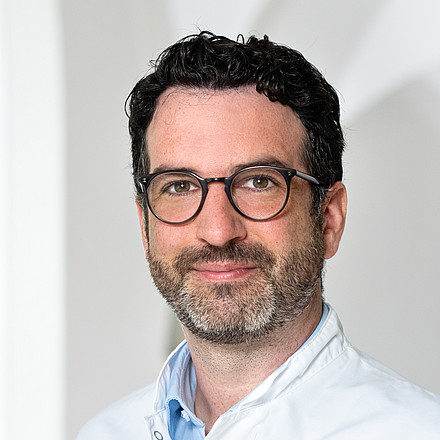
At the end of 2025, Charité – Universitätsmedizin Berlin and Deutsches Herzzentrum der Charité (DHZC) founded the Institut für Künstliche Intelligenz in der Medizin (IKIM). The institute’s areas of focus are the application-oriented development of AI and its evidence-based use in clinical settings, research into methods to make AI decisions transparent for doctors and a fast transfer of research results into practice and teaching. The institute is headed by Prof. Alexander Meyer, who also took on the newly created professorship for AI in medicine. He is a cardiac surgeon and computer scientist who has been conducting research into machine learning, data science and AI in medicine for more than 16 years. Our interview with him mainly focused on the institute’s role within Charité and potential points of connection for industry.
What were the main reasons for founding the Institut für Künstliche Intelligenz in der Medizin (IKIM) and what structural obstacles in past AI projects is it meant to overcome?
In Berlin, we have a superb environment for AI development in medicine and beyond. However, we also noticed a lack of assertive organizational affiliation – and that is why we founded IKIM. We want to contribute to research and help make developments applicable. We bring together experts from the fields of medicine and data science as well as the basic sciences related to machine learning and big data processing. For example, we collaborate with the Berlin Institute for the Foundations of Learning and Data (BIFOLD), where I am also head of a research group. All this is not intended to centrally manage development, but to have a central entity orchestrating medicine, AI and machine learning. Together with other organizational entities, we developed a common AI strategy for all of Charitè. We discussed this with more than 100 actors and stakeholders within Charitè and have been implementing it since the beginning of February of this year.
As far as overcoming obstacles is concerned, the main goal is to resolve any outstanding issues, such as: Do applications comply with the Medical Device Regulation (MDR) and/or the GDPR? How can processes of AI development and application be monitored? How can we build connections with the business community? How can research results be transferred quickly and effectively into practice? We also want to be a central point of contact for these questions.
How exactly does IKIM integrate data scientists into clinical workflows? And how does this lead to Charité increasingly becoming a health institution developing its own AI-based tools and platforms?
As far as this is concerned, we have excellent framework conditions at Charité, for example our Digital Clinical Scientist program. This is targeted at tech-savvy clinical staff who have profound digital knowledge. In a sense, they are interdisciplinary experts who are able to effectively convey medical knowledge to colleagues in the fields of computer and data science and, in turn, better understand the contributions of those colleagues. In addition, it is standard procedure for us to form interdisciplinary teams.
Regarding the in-house development of AI-based tools and platforms, we strive to strike a balance between make and buy. So, depending on the use case and application area, we decide whether it makes sense to develop something ourselves or to purchase it. For example, we have piloted some good Ambient Scribes tools, software that generates complete documentation from recording doctor-patient conversations. At the same time, we cannot simply rollout solutions from major suppliers such as ChatGPT or Claude, because of their cloud-based data processing which sometimes happens outside Europe. These are not certified medical products and their use is very cost-intensive. For the past year, we have developed our own platform optimized for the requirements of university medicine.
Which role does the digital model clinic at Deutsches Herzzentrum der Charité play for IKIM’s activities? How does the model clinic’s expertise in cardiac surgery influence IKIM’s thematic priorities?
IKIM is administratively affiliated with Deutsches Herzzentrum, but has the clear mandate to have an impact on all of Charitè. The digital model clinic at the heart center gives us a unique opportunity to work with new hardware – the new heart center building – and new software, such as the new hospital information system. It can serve as a kind of real-world laboratory, without any infrastructure issues impeding is. Leveraging AI, data science and data products, we can achieve an exemplary level of digitalization in here by 2029 that will bring great benefits to doctors, patients and employees, such as increased treatment efficiency and greater transparency.
My own expertise in cardiac surgery may influence this work in that I may develop ideas that could lead to solutions in the field of cardiology. But, of course, we are working on issues that touch on all areas of medicine.
How does IKIM help ensure that AI systems not only function technically but also meet the requirements for clinical evidence, governance and patient safety?
There are two aspects to this: Firstly, we actively research and thus generate clinical evidence. And secondly, as part of our AI strategy, we have worked with the AI Compliance team to establish guidelines that enable us to classify the risk associated with applications. The higher the risk associated with an application gets, for example, the more instruments we need to monitor it. In this area, we closely collaborate with the business unit Governance, Compliance and Data Security at Charité, which includes AI Compliance, as well as with the legal and IT divisions. To bring our own developments into practice, we have to undergo an elaborate certification process. This is why most hospitals prefer to purchase clinical applications that have already been certified.
What strategic initiatives is IKIM planning to establish AI as a core infrastructure in the healthcare sector over the long term? And what opportunities are there for industry participation?
On paper, the AI strategy I mentioned earlier runs from 2026 to 2030. However, it is not a rigid plan but a living document. There is so much change happening in this field that no one can say what will be possible in 2030. In that sense, the year 2030 is just a rough outline. My overarching goal is for IKIM to generate real added value in the areas of research and application at Charité, so that we can efficiently implement AI in medicine. We are focusing in particular on the application of foundation models and agent-based AI systems. Such systems may be able to interact with clinical systems in a semi-autonomous or autonomous manner within the next four years and, in some cases, even make decisions.
Naturally, we also want to integrate the business community. We are now looking at means to forge such connections. The digital model clinic at Deutsches Herzzentrum, for example, could provide a good framework in which to test and further develop new applications. Data collected in this context could be used, for example, for product approval and for our research.
Berlin is one of Europe’s leading research regions, characterized by an exceptional concentration of universities, non-university research institutes and technology parks. What role do this unique ecosystem and the HealthCapital Berlin Brandenburg cluster play in IKIM’s work and the development of medical AI??
Berlin is great! When I first moved here, I was amazed about all the opportunities you have here. There are more than you can actually avail yourself of. This is particularly true of the numerous networking events. When I was involved in founding x-cardiac, Berlin Partner supported us in the spin-off, making many things run more smoothly – from networking to finding suitable office space.
Furthermore, the proximity of federal ministries and government agencies is another great advantage of the city. And last but not least, the high density of universities, research institutions and the Charité means that no matter how exotic the problem – you are likely to find an expert for it relatively fast. Berlin offers excellent conditions.
Further information:
- Website Institut für Künstliche Intelligenz in der Medizin
- Press release on the foundation of IKIM
- Website BIFOLD https://www.bifold.berlin/
- BIH Charité Digital Clinician Scientist Program
- x-cardiac
Personal profile:
Alexander Meyer has been the W3 Professor of Artificial Intelligence in Medicine at Charité and DHZC since May 1, 2025, and is the founding director of IKIM. He studied medicine in Frankfurt am Main and conducted research at Rockefeller University in New York in 2010 and 2011. After earning his doctorate in Leipzig in 2014, he joined the former Deutsche Herzzentrum Berlin (DHZB, now DHZC) in 2015, where he continues to work today. As a participant of the BIH Clinician Scientist Program, he combined his residency program in cardiac surgery at DHZC with research into AI. In the BIH Digital Health Accelerator, he developed AI-based medical technology, which he brought to clinical application through spinning off the start-up x-cardiac. In 2020, he completed his habilitation in Berlin and was appointed to the W2 professorship in Clinical Applications of AI and Data Science at Charité. Since 2023, he has been Chief Medical Information Officer (CMIO) of DHZC, where he is strategically responsible for digital transformation and AI integration.

