
Interview | Leonie Mentrup, Director Hospital, Doctolib Deutschland
Modellregion Gesundheit Lausitz (Health Model Region Lusatia) is a groundbreaking flagship project. With European health tech company Doctolib as a partner, the medical university Medizinische Universität Lausitz - Carl Thiem (MUL-CT) will serve as a leading digital hospital and a real-world laboratory for integrated care.
Doctolib is best known to the region’s general public as an appointment-booking platform for outpatient care. However, it also digitally supports entire patient care journeys. What role does Doctolib play in today’s healthcare system?
Appointment booking was indeed how we started. But then we quickly noticed that there is a much more basic question at the heart of this: How does the right information get to the right place at the right time?
Today, leveraging AI solutions, we support patients every step of the way, from the initial contact with a practice through digital registration to cross-sector communication. The best example is our recently launched all-in-one practice software, which works with three integrated AI assistants for answering the phone, billing and documenting consultation. It is always our goal to provide relief, so there is more time for patient care. Looking ahead, we plan to expand the solution to include medical care centers. The practice software landscape is extremely fragmented and there is a great need for modernization.
For hospitals, Doctolib serves as an infrastructure partner. Just as a region requires roads to ensure mobility, a healthcare system needs digital infrastructure to ensure coordination and information flow. In Lusatia, roughly 40,000 patients already use Doctolib. This is a solid foundation from which integrated care can be build.
As a digitalization partner, Doctolib supports Medizinische Universität Lausitz - Carl Thiem (MUL-CT) as a leading digital hospital in the Modellregion Gesundheit Lausitz. What makes this project unique, and how does the Doctolib contribute to cross-sectoral networking in the region?
What makes Lusatia unique is the combination of urgent need for action and a real will to shape things. Many regions are faced with problems such as a lack of qualified specialists, ageing medical staff and a low population density. But here in Lusatia, serious efforts are being made to explore how to systematically and innovatively improve healthcare.
Doctolib’s technology focuses on three points: Firstly, cross-sectoral networking between hospitals, medical care centers and private practices. Secondly, administrative relief through digital communication and automized documentation. And, thirdly, more quickly and easily directing patients to the right care provider.
Based on our experience, each institution can save up to 16 hours of administrative effort per week: This is equivalent to the capacity of about 200 healthcare professionals, who are then available to provide direct patient care. That makes a difference. Not just for the healthcare professionals, but, above all, for the people in the region.
Lusatia has the potential to be a pioneer by national standards. The principles are transferable: Networking, administrative relief and patient-centered care work everywhere.
Interoperability is still a key challenge in both the outpatient and inpatient sectors. How does Doctolib ensure that its solutions can work with other systems across different organizations and sectors via open interfaces?
Interoperability is a basic requirement for effective digitalization. Our approach strictly follows established standards, such as the international healthcare standards HL7 v2 and FHIR. We also meet the Gematik ISiK requirements for cross-sectoral communication. This way, we ensure that our solutions work regardless of the healthcare provider or the hospital information system in use. Specifically, this means integration with the major providers of hospital information systems, and APIs that allow for third-party integration.
Standardization and local adaptation must go hand in hand. Smooth technological solutions that ignore regional structures do not work, and local siloed solutions cannot be scaled. That is why we always think digitalization in the context of the entire patient care journey, together with the people who work along it on a daily basis.
Doctolib is also interested in scientific collaborations to advance cutting-edge research in the health sector and establish a leading research laboratory for AI and health in Europe. What insights do you expect to gain, who stands to benefit and what partnerships already exist?
We collaborate with thousands of healthcare facilities on a daily basis, and we see where processes are stalling – and where they are already running smoothly. However, this knowledge does not suffice without scientific support. With regard to AI, we already collaborate with research institutions like DFKI in Germany and Inria in France. Clinically, we collaborate with the CHU de Nantes, among others, on AI-powered triage systems. Our cooperation with MUL-CT is particularly interesting for the German market. The research focus on the digitalization of the healthcare sector gives us the opportunity to evaluate and improve digital infrastructure under real-world conditions.
Joint creation and evidence-based collaborations are fundamental. Hundreds of doctors, IT specialists and healthcare professionals are actively integrated into our development processes.
Doctolib has had its German headquarters in Berlin since 2016 and has grown steadily ever since. What role do Berlin as a location and the Berlin-Brandenburg metropolitan region play in the company’s development and success?
Tech talents, cutting-edge research, the healthtech ecosystem and the high density of medical institutions and associations make Berlin a strategic location for Doctolib. And Brandenburg is getting increasingly attractive for us as well. The Modellregion Lausitz shows that the capital region has the potential to become a laboratory for innovative healthcare models in an exchange between the reality of urban and rural healthcare.
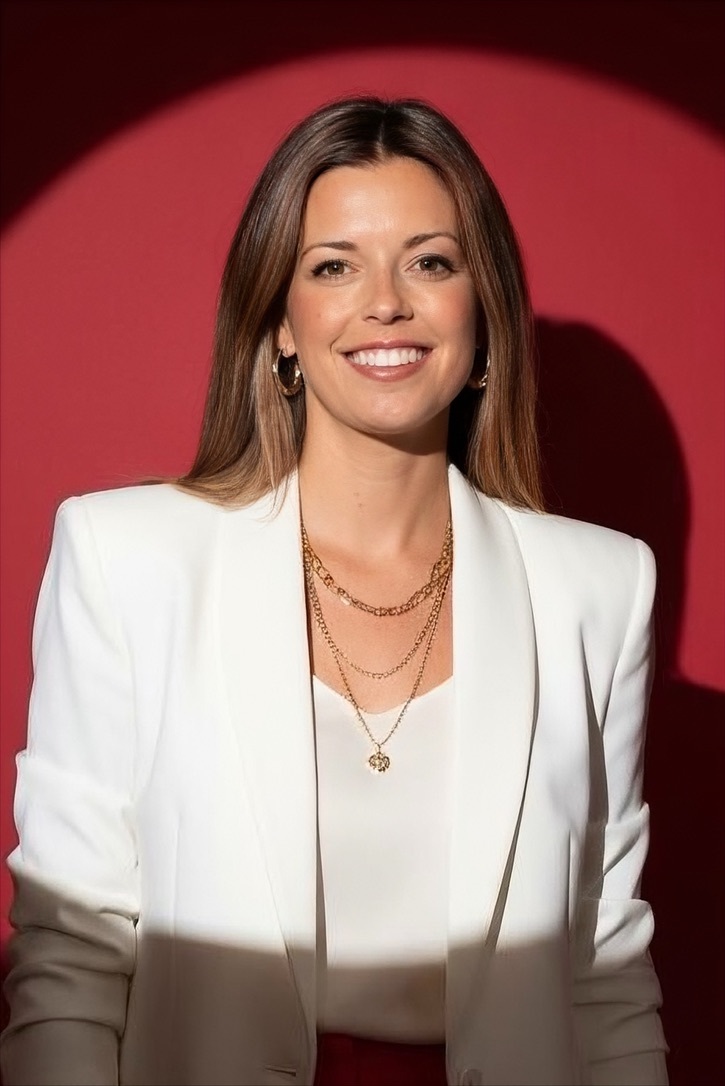
Personal profile: Leonie Mentrup is Director Hospital at Doctolib Deutschland and responsible for collaborations with hospitals and outpatient care facilities.

