

Interview I Prof. Nikolaus Rajewsky I Einstein Center for Early Disease Interception: Cell-based precision medicine from Berlin
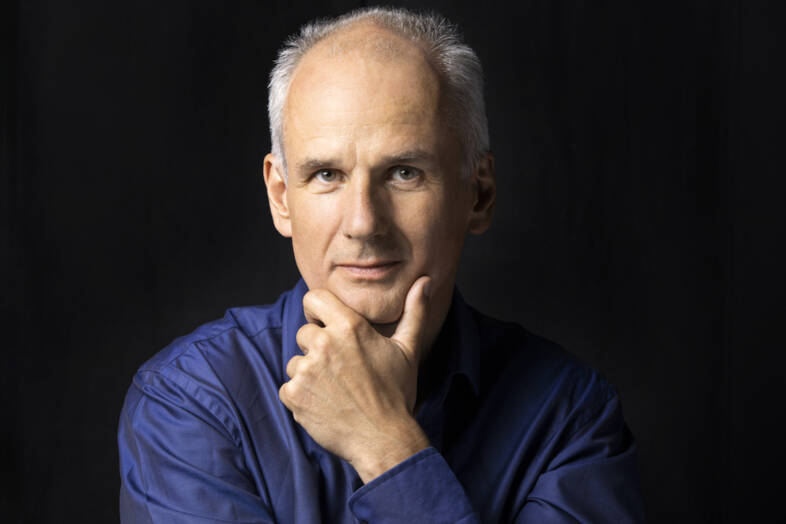
We are talking to Prof. Nikolaus Rajewsky, initiator of the EC-EDI, director of the Berlin Institute for Medical Systems Biology at Max Delbrück Center (MDC-BIMSB) and professor at Charité – Universitätsmedizin Berlin.
1. Why are you focusing on pulmonary and neurological diseases?
In our start-up phase, we launched an open process, in which researchers from different institutions jointly considered in which areas a cross-institutional collaboration would have the greatest leverage, which topics are particularly relevant clinically as well as for research. The outcome was that we decided to focus on dementia and certain pulmonary diseases.
2. Does such a project just come out of nowhere?
The term “cell-based medicine” is not that old. It was mainly coined in a paper by me and other renowned scientists that appeared in Nature in 2020. But the topic has been on my mind for quite some time, for example in establishing various project consortia such as Life Time (EU), Virchow 2.0 (Cluster 4 Future) or the successful ImmunoPreCept cluster of excellence.
3. Aside from its excellence – what makes this project special?
I primarily regard the EC-EDI as an open ecosystem in which other institutions are invited to participate. We do not follow a top-down approach, but welcome contributions from all interested parties in science and society. For example, one of our participants is the Museum für Naturkunde Berlin (Berlin Museum of Natural History).
4. Do you seek to establish partnerships with the business community as well – and do you see a role for the Cluster HealthCapital here?
The current concept is supported by the Bruker Center of Excellence, among others. In the future, we seek to establish collaborations with the business community and welcome direct approaches as well. To identify and network with suitable companies, in this as in past initiatives, we always welcome the support of the Cluster HealthCapital.
5. Where is this journey headed? Do you already have ideas for the near or distant future?
It is my goal to eventually set up a Berlin Cell Hospital. And this is not merely intended to be a virtual center, but a physical location where molecular prevention strategies and diagnostics are developed, and where new drug targets for molecular and cellular therapies are identified. The concept is meant to encompass the transfer of research results into application as well as defined training and further education programs. We want to take another step towards strengthening Berlin’s life sciences ecosystem.
Quote:
“Berlin is a leader in the field of cell-based medicine. It is essential to pool expertise and resources so that we can work freely across institutional boundaries.”
Further information:
- Nature paper: LifeTime and improving European healthcare through cell-based interceptive medicine | Nature
- In-depth with Prof. Rajewsky and Prof. Sander
- EC-EDI at Einstein Foundation: Einstein-Zentrum Early Disease Interception – Einstein Stiftung Berlin

