



Special Topic | Prevention: From personal health to pandemic preparedness
Closing this gap requires a comprehensive approach to prevention – from increasing health literacy to early detection and robust public health structures. Companies and research institutions in Berlin Brandenburg are working on a range of preventive strategies, including digital support tools, vaccines, and concepts for preparing for the next pandemic.
Today, a 65-year-old person in Germany can expect to live for another 18 to 21 years. However, only a little more than eight of these years are likely to be spent in good health. As more people live into old age, the need for long-term care and treatment for chronic conditions is increasing. This demographic development is one of several factors contributing to rising healthcare expenditure. Spending by Germany's statutory health insurance system increased from EUR 202 billion in 2015 to a record EUR 336.4 billion in 2025 – an increase of 66.6 percent within a decade1.
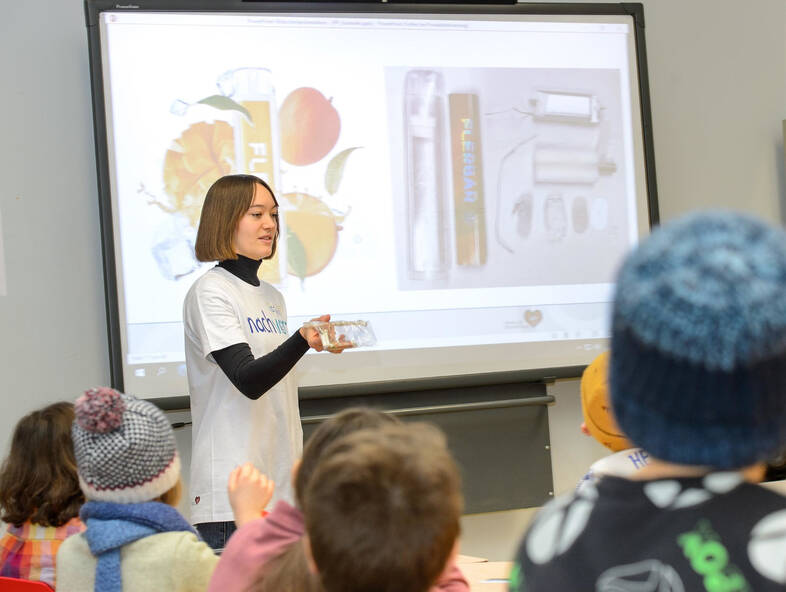
Investing in prevention can help extend the number of years people spend in good health. Improving health literacy is one focus of prevention initiatives in Berlin Brandenburg. A representative survey conducted in 2024 found that three-quarters of adults in Germany had low health literacy2. Charité – Universitätsmedizin Berlin addresses this challenge through its Health Education research focus, with projects focusing on areas such as mental health and drug prevention. Established in 2024, PatientenUniversität Brandenburg offers information and support services tailored to the needs of people in rural regions. The Healthy Communities project is developing multilingual services and training health guides to help people from different social groups navigate local health resources.
Targeted local initiatives can also help close gaps between medical and social care. DiVerso, developed as a pilot project by the Treptow-Köpenick public health office, is a free digital portal that helps professionals working within Berlin's support system identify suitable services for people facing complex health and social challenges.
Early detection and tailored prevention
Prevention is most effective when it takes individual risks and circumstances into account. Detecting disease before symptoms appear offers opportunities to intervene early and potentially delay or prevent its progression.
Launched in July 2026, the Einstein Center for Early Disease Interception (EC-EDI) aims to detect and treat diseases at their earliest stages, potentially even when only a few diseased cells are present. Building on a two-year preparatory phase, the center has secured €6 million in funding over six years. Researchers from Charité – Universitätsmedizin Berlin, the Max Delbrück Center, Freie Universität Berlin, Humboldt-Universität zu Berlin and other partners are developing methods that combine single-cell analysis, spatial biology, advanced disease models and artificial intelligence.
Prevention also needs to reflect the needs of different population groups. For example, migrants, children, and people facing social disadvantage may encounter different health risks and barriers to care. Tailoring programs to their needs, including language and access, is an important part of effective prevention.
Women's health is another area where prevention is becoming more tailored to individual needs and life stages. The PETRA project, involving the Berlin Institute of Health at Charité (BIH) and Femna Health, is developing an AI-supported app to provide personalized information and support during perimenopause. Vara AI, operated by MX Healthcare GmbH, develops AI software to support radiologists in breast cancer screening. Beyond individual applications, the GAIA network, initiated by the Berlin Institute for the Foundations of Learning and Data, connects research and innovation activities in women's health. Berlin's WomenX Collective hub, launched in partnership with the United Nations Population Fund, Charité and BIH, brings together organizations working in this field.
Longevity: Preventive medicine or lifestyle trend?
While prevention focuses on reducing disease risks and detecting health problems early, longevity takes a broader approach: extending the years people spend in good health, often referred to as healthspan. The field combines preventive medicine with research into aging and lifestyle factors such as nutrition, exercise and sleep. While the benefits of regular physical activity, a balanced diet and established preventive measures are well documented, the effectiveness of many newer longevity treatments and interventions need further research.
Global and public health

Vaccination remains one of the most effective ways to prevent infectious diseases. In Berlin, both Charité – Universitätsmedizin Berlin and the Max Delbrück Center conduct vaccine-related research, while the Berlin Centre for Travel and Tropical Medicine is one of the largest clinical trial centers for vaccine studies.
ProBioGen is also contributing to vaccine development. Together with Minapharm, the Berlin-based biopharmaceutical company is working on a vaccine candidate against Bundibugyo ebolavirus, with up to US$16.5 million in funding from the Coalition for Epidemic Preparedness Innovations (CEPI). The project aims to advance the candidate into preclinical development and a planned Phase 1 clinical trial in Africa.
Managing highly infectious diseases also requires specialized clinical facilities and infection control procedures. In May 2026, Charité treated a U.S. citizen infected with Bundibugyo ebolavirus in its specialized isolation unit. The case illustrated the hospital's capacity to manage highly infectious diseases, combining specialist clinical care with strict infection control and close coordination with public health authorities.
Early detection and surveillance are also important components of outbreak preparedness. Several institutions in Berlin Brandenburg contribute to this work. At the Robert Koch Institute's Center for Artificial Intelligence in Public Health Research (ZKI-PH) in Wildau, researchers develop AI-based methods to analyze health and environmental data, model disease spread and support public health decisions. The WHO Hub for Pandemic and Epidemic Intelligence in Berlin works with countries and research partners worldwide to improve disease surveillance, data analysis and early warning systems. In October 2026, the WHO Hub renewed its cooperation agreements with Charité and the Robert Koch Institute through 2031.
Voices from the Ecosystem

Prof. Leif Erik Sander, Director of the Department of Infectious Diseases and Critical Care Medicine at Charité and head of a research group at the Berlin Institute of Health at Charité (BIH) and spokesperson of the Einstein Center for Early Disease Interception
"Prevention and innovation are the only ways to keep our health system financially sustainable in the long term."

Madeleine Roach, Country President, Sanofi:
"Prevention and early detection are essential to building resilient healthcare systems. By combining scientific innovation with strong partnerships across healthcare, research and public institutions, we can protect people from preventable diseases, detect illness earlier, and prevent secondary diseases - building not only a more resilient healthcare system, but a more resilient economy and society for generations to come."
Highlight project: Centre for Artificial Intelligence in Public Health Research (ZKI-PH)
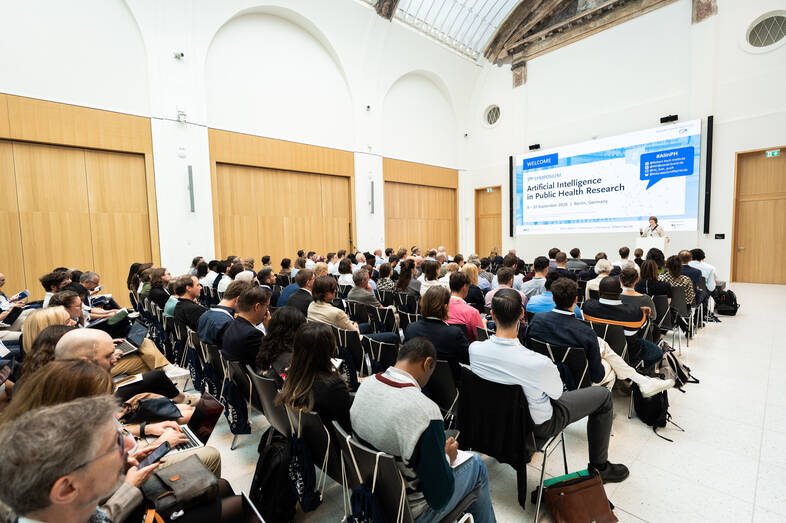
The Centre for Artificial Intelligence in Public Health Research (ZKI-PH) of the Robert Koch Institute develops AI-based methods for epidemiology, disease surveillance and public health research. The research facility is located at Centre for Future Technologies in Wildau, Brandenburg, and employs more than 50 researchers in five units working on developing models, adapting existing AI methods for public health applications, and preparing data and results for public authorities and policymakers. One example is CLIMADEMIC, a research project investigating how climate change influences the spread of infectious diseases and pandemic dynamics. By combining climate models and data with insights from infection biology and epidemiology, the project uses artificial intelligence to better understand climate-related health risks and predict how disease patterns may evolve under future climate scenarios. The ZKI-PH also offers an interdisciplinary three year doctoral program in the field of AI-supported applications in public health.

Dr. Katharina Ladewig, Managing Director of the ZKI-PH:
"At the Center for Artificial Intelligence in Public Health Research, we want to understand where infectious diseases are spreading, who is at risk and how outbreaks might develop. AI helps us connect information from different sources, from infection reports to climate data, and identify patterns that would otherwise be difficult to detect. With this, we can give public health authorities a better basis for deciding when and where to act."
Future Project: DiVerso
DiVerso is a digital platform developed as a pilot project by the public health office in Berlin's Treptow-Köpenick district. It aims to improve access to health and social services, particularly for people with complex needs who struggle to navigate the existing system. The free online portal helps professionals working in healthcare, social services and public administration identify suitable support services based on a person's individual circumstances. It also provides multilingual checklists to help people understand which steps to take and where to seek assistance. By bringing together information on available services in one place, DiVerso aims to make referrals easier, reduce barriers to accessing support and improve coordination between the different organizations involved in health and social care.
| Selected organisations and companies working on prevention, early detection and health promotion in Berlin Brandenburg | |
|---|---|
| Organization | Focus Area |
| Center for Artificial Intelligence in Public Health Research (ZKI-PH), Robert Koch Institute | Develops AI models and simulations for epidemiology, disease surveillance and public health research. |
| Einstein Center for Early Disease Interception (EC-EDI) | Investigates molecular changes that precede disease symptoms, using single-cell analysis, disease models and AI to develop new approaches to early detection and treatment. |
| WHO Hub for Pandemic and Epidemic Intelligence | Connects countries and research partners to improve disease surveillance, outbreak detection and analysis of emerging health threats. |
| Early detection and precision medicine | |
| CheckImmune | Provides immune biomarker testing and data analysis for drug development and clinical studies. |
| Epimune | Uses epigenetic markers to measure immune cell populations in blood samples for research and immune monitoring. |
| Mental health and digital prevention | |
| DearEmployee | Provides software for assessing psychosocial risks at work and identifying measures to improve working conditions. |
| detoxi Health | Offers app-based programs to reduce digital stress, excessive screen time and problematic smartphone use. |
| Krisenchat | Provides free, confidential crisis support via chat for children, adolescents and young adults under 25. |
| SuchtGPT | Develops an AI chatbot to answer questions about substance use and addiction and direct users to support services. |
| Women’s health | |
| Beyoni | Offers at-home hormone and nutrient testing with individualized health recommendations for women in midlife. |
| Evela Health | Provides digital guidance and support for women during perimenopause and menopause, covering symptoms, lifestyle and hormonal changes. |
| Femna Health | Offers at-home hormone and other laboratory tests, health information and individual consultations on menstrual and menopausal health. |
| femote | Develops digital tools for gynecological practices and patients, combining symptom assessment, at-home testing and treatment guidance. |
| Hermaid | Offers a digital menopause companion with symptom tracking, health information and access to professional advice. |
| MX Healthcare GmbH (Vara AI) | Develops AI software to assist radiologists in mammography screening and the detection of suspicious breast lesions. |

