


Special Topic | Infrastructure for Life Science Innovation in Berlin Brandenburg
Laboratories and scientific institutes remain the foundation of this changing innovation infrastructure. Increasingly, these support structures combine research space with entrepreneurship support, clinical test beds, regulatory expertise, scale-up facilities and links to industry. Some offer access to wet labs and hospital environments, others provide scale-up capacity and GMP manufacturing facilites.
Incubators: connecting research and entrepreneurship
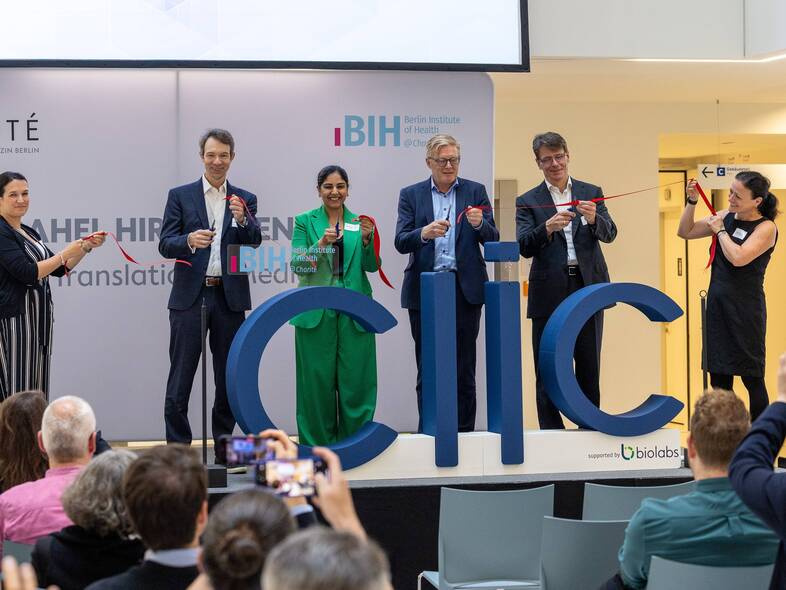
Incubators offer more to early-stage companies than lab benches. They can help provide a structured route from an academic finding to a validated technology or spin-off. Young founders in Berlin Brandenburg now have a range of options to choose from, such as programs run by research institutions, incubators based in hospitals, corporate wet-lab facilities and support services on research campuses.
The BIH Clinical Incubator (CLIC) is located directly within a hospital setting. Run by BIH and BioLabs, CLIC was opened at the Rahel Hirsch Center in July 2025. It provides academic teams and early-stage biotech start-ups with access to labs, office space, mentorship and regulatory advice. CLIC’s aim is to translate advanced and personalized therapies into clinical applications and to foster spin-offs focused on advanced therapy medicinal products (ATMPs).
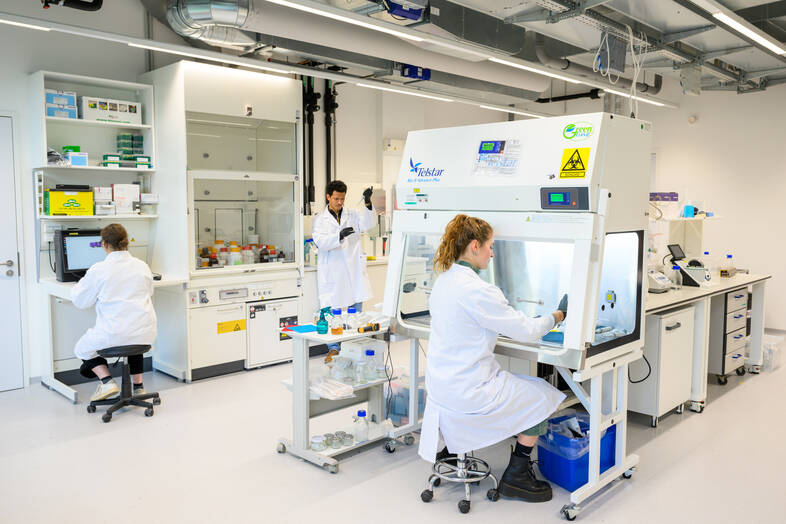
At Bayer Co.Lab Berlin, early-stage companies working in advanced therapy medicinal products, oncology and related fields have access to fully equipped laboratories, shared equipment, office space and tailored mentoring. The BerlinBioCube Start-up Lab offers young biotech companies laboratory and office space on Campus Berlin-Buch. The start-up lab is close to the Max Delbrück Center, clinical institutions and established biotechnology companies and thus allows young ventures to operate within an existing life science environment.
While less specialized, Brandenburg offers similar infrastructure. At Potsdam Science Park, its two Golm Innovation Centers, GO:IN and GO:IN 2, provide flexible laboratory and office space for start-ups and growing companies in biology, chemistry and other research-based fields.
Accelerators: Advancing defined projects
Accelerators support projects for a set period of time, with progress measured against defined milestones. In the life sciences, they help research teams and companies address specific challenges, including proof of concept, clinical need, regulatory strategy, product development and market access.
In digital and data-driven medicine, the BIH Digital Health Accelerator (DHA) offers a specialized program for developing regulated digital health solutions with researchers and clinicians from Charité, as well as users and other institutions. Projects range from AI- and machine-learning-based clinical decision-support systems to digital therapeutics, data platforms and software as a medical device. Many also use sensors, robotics and augmented or virtual reality. In May 2025, BIH reported that the program had supported more than 60 projects and generated 13 spin-offs, including one nonprofit organization and one company exit.
SPARK-BIH is a translational program with an accelerator function. It supports academic projects focused on therapies, preventive approaches, diagnostics and medical devices. The program provides mentoring, education and translational expertise alongside milestone-based project development, with the aim of addressing development risks before clinical application.
CDL-Berlin Health supports science- and technology-based ventures in fields including therapeutics, diagnostics and medical technologies. It is operated at ESMT Berlin. Founders work with experienced entrepreneurs and industry experts to set development objectives and address project-specific challenges.
A recent addition is JUNI, the Berlin Brandenburg start-up factory for science-based and technology-oriented ventures. Its six-month Science to Venture Program is open to deep-tech and life science spin-off teams and focuses on team development, market validation and the transition from scientific project to viable company.
Corporate innovation initiatives offer another route into industry. Pfizer’s Digital Health Hub, MSD’s IDEA Studio Europe, RoX Health and Future4Care in Berlin connect start-ups with healthcare organizations and corporate partners. While they are not conventional incubators or accelerators, they support the development of new healthcare technologies through industry collaboration.
For more information on Financing instruments and investor access please see “Financing life science innovation in Berlin Brandenburg".
Tech parks and campuses: Room for growth
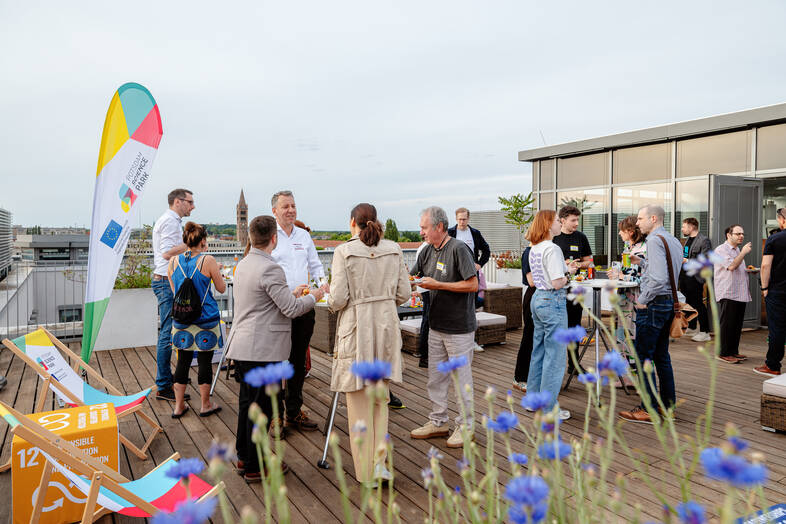
Technology parks provide laboratories, offices and production facilities for research-based companies. Campus Berlin-Buch combines one of Germany’s largest biotechnology parks with biomedical research institutes and nearby hospitals. Berlin Adlershof is a major location for biotechnology, pharmaceuticals and analytical technologies. Both bring companies close to universities and non-university research organizations, while Potsdam Science Park is expanding its capacity with additional company buildings.
The FUBIC innovation campus in Berlin-Dahlem is also adding space for research-based companies. Its Innovation Center is scheduled for completion by the end of 2026, with the first start-ups due to move in during 2027. The first office and laboratory building, named FUHUB. FUHUB welcomed its first tenants, including the Freie Universität Scale-up Lab, in 2025.
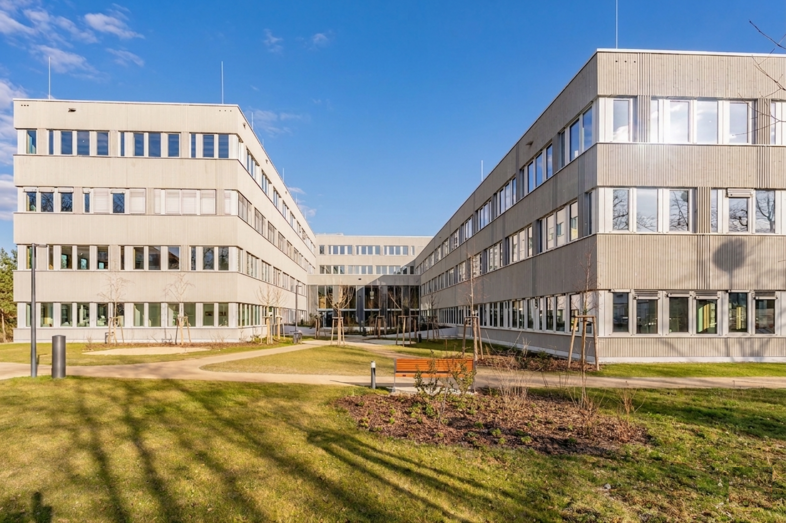
The FUBIC Innovation Center is being developed near Freie Universität Berlin. The central innovation building will provide around 30,000 square meters for up to 80 technology-oriented start-ups and young companies.
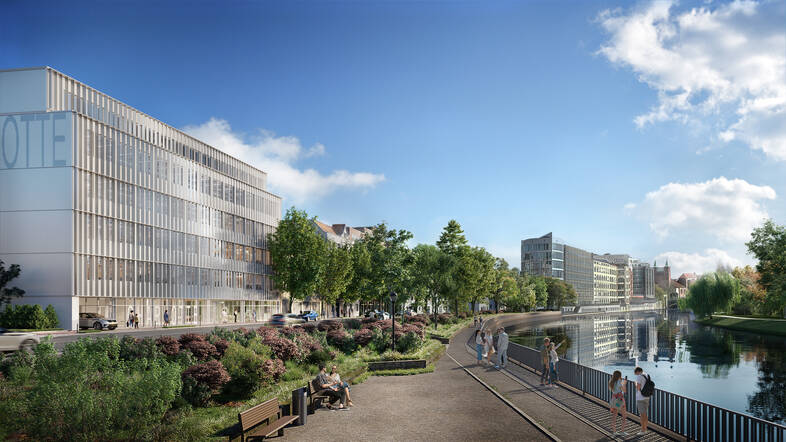
Another recent addition to Berlin's life science real estate landscape is CHARLOTTE, a laboratory and office development currently under construction in Berlin-Charlottenburg. Designed for research-driven companies and technology ventures, the site provides modern laboratory infrastructure alongside flexible office space and benefits from its proximity to universities, research institutions and the wider innovation ecosystem in western Berlin.
The Health Innovation Quarter Berlin-Mitte follows a different model. Initiated by Charité – Universitätsmedizin Berlin and Bayer, the approximately five-kilometer innovation district extends from Campus Charité Mitte through the Bayer site at Nordhafen to Campus Virchow-Klinikum. It encompasses research, clinical application, industrial development and production, with institutions including Charité, Bayer, the German Rheumatism Research Centre and the Max Delbrück Center. The future Berlin Center for Gene and Cell Therapies (BC GCT) will be one of its central translational projects.
The SEE:LAB Competence Center for Biomaterials at the Teltow-Seehof research campus provides 2,000 square meters of laboratory and office space for founders and innovative companies in biomaterials, biochemistry, chemistry and related fields. At Marienpark Berlin, HYBRICK is developing laboratory, production and office space for life science and technology companies, alongside smaller equipped Launch Labs for start-ups. Riverside Lab, a new IQ spaces development at Berlin-Nordhafen, will house the BC GCT and its GMP facility, operated by ProBioGen. MotionLab.Berlin provides laboratories, machinery and makerspace facilities for prototyping and fabrication, particularly for hardware and hardtech ventures.
Scheduled to open at Berlin-Nordhafen in 2028, the Berlin Center for Gene and Cell Therapies (BC GCT) will combine research and development facilities with an incubator and GMP manufacturing capacity for gene and cell therapies up to clinical Phase II. In 2028, Bayer Co.Lab is scheduled to move into the center, which is expected to accommodate around 15 to 20 start-ups.
Another addition is planned at Campus Benjamin Franklin. The Berlin Centre for the Biology of Health (BC-BH), a joint initiative of Charité and Freie Universität Berlin, is expected to provide laboratory and collaborative space for around 150 researchers from 2028. Its focus will be on the biological mechanisms that preserve health and prevent disease.
Expanding Berlin Brandenburg's translational capabilities
Berlin Brandenburg is building new routes from scientific discovery to clinical application and company formation. JUNI and CLIC add support for technology transfer, while the planned FUBIC Innovation Center and Berlin Center for Gene and Cell Therapies will provide space and infrastructure for technology development and GMP manufacturing. Together with the region’s well-established research institutions, initiatives such as these give life science teams access to a broad range of resources and support at different stages of translation.
Overview Incubators, accelerators and innovation programs (selection)
| Name | Specialization |
|---|---|
| Charité BIH ARC Innovation Center (CBAIC) | Open innovation center focused on needs-led medical innovation. |
| Bayer Co.Lab Berlin | Laboratory space, equipment and expertise for early-stage companies in cell and gene therapies, oncology and related fields. |
| BerlinBioCube Start-up Lab | Laboratory and office space for biotechnology and medtech start-ups at Campus Berlin-Buch. |
| Berlin Center for Gene and Cell Therapies (BC GCT) (planned) | Planned incubation, research and GMP infrastructure for companies developing gene and cell therapies. |
| BIH Clinical Incubator (CLIC) | Wet-lab and office incubation for advanced and personalized therapies, particularly ATMPs. |
| BIH Digital Health Accelerator | Development of digital health projects from clinical need to validation, licensing, collaboration or company formation. |
| CDL-Berlin Health | Mentoring for science-based ventures in therapeutics, diagnostics, medtech and related healthcare fields. |
| Flämingo Accelerator Health Cluster | Six-month program for healthcare, prevention and well-being start-ups, supported by Fraunhofer IZI-BB and the Fraunhofer Center for Digital Diagnostics. |
| GO:IN and GO:IN 2 innovation centers | Laboratory and office space for science-based companies in biology, chemistry, physics and related fields. |
| Green Health Accelerator | Pilot development for climate-tech solutions addressing resource efficiency in healthcare. |
| HYBRICK Launch Labs | Laboratory and office units for life science, biotech and deep-tech start-ups and scale-ups. |
| JUNI Science to Venture Program | Six-month venture-building program for life science and deep-tech research teams. |
| Match & Connect | Collaboration program connecting start-ups with clinicians, researchers and clinical facilities at Charité and BIH. |
| Nucleate Germany Activator | Educational and venture-development program for academic biotechnology teams. |
| SPARK-BIH | Translational funding and mentoring for academic projects in therapeutics, diagnostics and medical devices. |
| Startup Lausitz Accelerator | Cross-sector program with a focus on health and medtech. |
| Vision Health Pioneers Incubator | Incubation for early-stage healthcare founders, including digital health and other healthcare fields. |
Research infrastructure: The capabilities behind translation
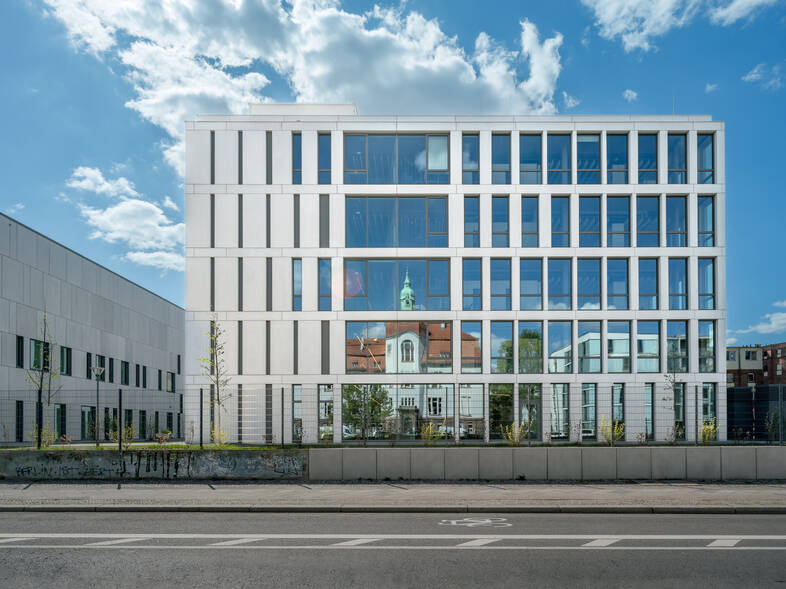
Research infrastructure is not primarily designed to develop a venture or business model. It provides the laboratories, equipment, data, materials and specialist services needed to conduct research and move discoveries toward application. In the life sciences, this includes advanced laboratories, imaging and analytical technologies, human model systems, clinical research facilities, clean rooms and GMP manufacturing facilities.
On the Charité Campus Virchow-Klinikum, the Berlin Center for Advanced Therapies (BeCAT) and Der Simulierte Mensch (Si-M) opened in April 2026. BeCAT provides laboratories and clean-room infrastructure for developing advanced therapies based on genes, cells and tissues. Si-M, jointly operated by Charité and Technische Universität Berlin, develops human cell and organ models to investigate disease mechanisms and support the preclinical testing of potential treatments.
Technology transfer offices and IP support
Technology transfer offices form the institutional bridge between research and application. They identify inventions, advise researchers before publication, assess protection and commercial potential, manage patenting and licensing, negotiate IP provisions in research agreements and support routes to industry collaboration or spin-off formation.
Charite BIH Innovation: Central technology transfer service for Charite and BIH, covering IP and licensing, technology scouting, commercialization, and spin-off support
Max Delbrück Center – Innovation & Entrepreneurship: The department combines IP protection with scouting, business development, industry partnerships and spin-off support
Freie Universität Berlin – Patent and Licensing Service: Responsible for the legal protection and commercial exploitation of university research results
Technische Universität Berlin – Center for Intellectual Property: Central contact point for university inventors; TU Berlin's transfer services also cover patents, licensing, cooperation agreements and start-up support
Potsdam Transfer – Patent and Licensing Service: Brandenburg example offering invention assessment, coordination with patent attorneys, administrative support and commercial exploitation services for University of Potsdam researchers
VOBB (Verwertungsoffensive Brandenburg): joint IP‑exploitation network of the eight Brandenburg universities (and two Leibniz institutes), supporting patenting and commercialization
The Berlin Model: A standardized framework for IP transfer in academic spin-outs
A recent initiative aims to make IP transfer to academic spin-offs simpler and more transparent. Developed by the start-up factory JUNI together with a working group of technology transfer offices from Berlin's universities and research institutes, the Berlin Model introduces a standardized framework for assessing intellectual property and negotiating transfer agreements. In September 2026, ten Berlin universities and scientific institutions signed an agreement to test the model over three years. The framework includes a structured IP assessment, predefined transfer options and standardized contract terms, with the aim of completing suitable IP transfer agreements within three months.
Specialist networks
Specialist networks connect researchers, companies and clinical partners around shared technologies or fields of application. The following selection includes both networks dedicated to life sciences and health and cross-sector networks that provide relevant expertise in areas such as artificial intelligence, IT security, advanced materials and additive manufacturing.
Life science and health networks
- Bio-PAT: bioprocess analytics and process control
- DiagnostikNet | BB: in vitro diagnostics
- DUCAH: digital health, healthy aging and care
- MGA Medical goes Additive: additive manufacturing in healthcare and medical technology
- Life Sciences Tech Network (LSTN) Berlin: entrepreneurship and networking at the intersection of life sciences and technology
Enabling tech networks
- its.BB: IT security and cybersecurity
- KI Park: artificial intelligence
- XRBB: virtual, augmented and mixed reality industries
- SIBB: digital economy and IT industry
- INAM; advanced materials and deep tech
- AMBER: additive manufacturing

