


Special Topic | Financing life science innovation in Berlin Brandenburg
For biotech, medtech and digital health companies, financing is usually a staged process. Grants and government funding programs support research and proof of concept, public investors help close the pre-seed gap, and private venture capital becomes increasingly important as companies approach clinical development, market entry and international expansion.
The 2026 launch of bio:cap – International Life Science and AI Investival further strengthened the region’s profile as a meeting point for life science companies, investors and research institutions. The event combined an investor forum, innovation platform and networking festival.
Grants for early-stage projects

Public funding is particularly important before a company generates revenue or has clinical data. The Berlin Startup Stipendium (BSS) supports teams during the pre-foundation phase with a stipend, coaching and access to incubator infrastructure. The program is delivered through a network of incubators across Berlin, offering sector-specific expertise and facilities tailored to different technology fields.
Available nationwide, the EXIST Startup Grant and EXIST Research Transfer funding programmes of the Federal Ministry for Economic Affairs and Energy (BMWE) are an important source of support for start-up teams at Berlin’s universities and research institutions. The grants help early-stage teams develop business models, prototypes and technologies with high technical and financial risk. Berlin’s Science & Startups network, the joint start-up service of Freie Universität Berlin, Humboldt-Universität zu Berlin and Technische Universität Berlin, in partnership with Charité, helps researchers identify suitable programs and prepare applications.
For life science projects, GO-Bio Next, a funding programme of the Federal Ministry of Research, Technology and Space (BMFTR) is especially relevant. It supports research teams working on biotechnology, diagnostics, therapeutics, medical technology, synthetic biology and digital life sciences. It is designed for innovations with long development timelines and high technical and commercial risk, and can cover both proof-of-concept work and the preparation of a spin-off.
In Berlin and Brandenburg, the ProFIT funding programs offered by IBB and ILB provide additional support for research and development projects as well as early-stage technology companies, making them an important source of funding for innovation-driven start-ups.
Other important sources include BIH SPARK, a mentoring and funding program that supports the translation of early-stage biomedical research into clinical applications. In addition to funding, the project offers mentoring and training to support medical innovations. The BIH Clinical Incubator (CLIC) offers infrastructure, expertise and contacts for translational projects. Programs at Charité, the Max Delbrück Center and other research institutions complement these instruments. HealthCapital provides information on funding opportunities, partners, locations and internationalization.
Incubators and first investment

The region’s incubators and accelerators provide an important bridge between academic research, company formation and first financing. Initiatives such as JUNI, BIH CLIC, Nucleate, HPI Ventures and the Business Angels Club Berlin Brandenburg connect founders with mentors, investors and potential industry partners. Specialized programs such as Vision Health Pioneers, BIH SPARK, CDL Health and GeneNovate focus on healthcare, medical innovation and gene and cell therapy.
These organizations help founders validate their ideas, prepare for investment and identify suitable sources of capital. Early-stage companies can also approach to IBB Ventures and the High-Tech Gründerfonds, while the EIC Accelerator and SPRIND offer funding opportunities for high-risk innovations with significant market potential. For a detailed overview of the region’s incubators, accelerators, laboratories and other support infrastructure, see the infrastructure article.
VC investors and growth capital

As life science companies move toward clinical development, regulatory approval and market expansion, they require larger financing rounds and more specialized investors. Berlin’s broader start-up ecosystem provides a strong basis for this. In 2025, Berlin recorded 218 start-up financing rounds – more than any other German state and almost a third of all deals nationwide. Together, these financing rounds attracted approximately €2.7 billion in venture capital. While these figures cover all sectors, they underline Berlin’s visibility among national and international investors.
Public investors play an important role in supporting early-stage companies and facilitating access to further financing.
IBB Ventures, an IBB Group company, is one of the most active players in early-stage financing in Berlin and invests from pre-seed through Series A. In addition to its two VC funds for technology and creative companies with a combined volume of €100 million and an Impact VC Fund launched in 2022 with €30 million, a €11 million Pre-Seed Fund for Berlin deep-tech startups has been in its investment phase since 2025. It completed 39 deals in 2025, including 13 first financings and 26 follow-on rounds. Its B# (“be sharp”) Pre-Seed Funds provides convertible loans from €100,000 to €500,000 for Berlin-based DeepTech start-ups, helping companies reaching larger first private Seed financing rounds.
Brandenburg Kapital, the venture-capital arm of the Investitionsbank des Landes Brandenburg, supports start-ups and growth companies based in Brandenburg with equity and equity-like investments. HPI Ventures also provides capital and investor access for technology start-ups in Potsdam.
Public investors are complemented by private life science funds, business angel networks, corporate investors and international VCs (see table for selected investors and their investment focus). In addition to capital, these investors and networks contribute sector expertise, clinical and regulatory know-how, commercial networks and access to international financing syndicates.
Selected venture capital investors and business angel networks active in the German life sciences and healthcare sector
| Investor | Investment focus |
|---|---|
| Peppermint VenturePartners | Healthcare and life sciences, including medtech, diagnostics, digital health and life-science tools and services. |
| Apollo Health Ventures | Early-stage biotechnology focused on aging, age-related diseases and healthy lifespan. |
| MIG Capital | Life sciences and deep technology. |
| Forbion | Biotech and biopharmaceutical drug development; bioeconomy and planetary-health technologies. |
| Remiges Ventures | Early-stage biotech, drug discovery and therapeutics. |
| LifeCare Partners | Life sciences and healthcare, including medtech, diagnostics, biopharma and related bioeconomy sectors. |
| Springboard Health Angels | Pre-seed and seed health-tech and life-sciences start-ups. |
| Cherry Ventures | Generalist technology start-ups, including selected healthcare and health-tech companies. |
Recent transactions illustrate the range of available capital. AMBOSS raised €240 million in March 2025, while Voize secured US$50 million and 4TEEN4 €55 million in the same year. Recare followed with a €17.5 million funding round in January 2026. In biotechnology, Captain T Cell raised financing and grants totaling €20 million, while Cellbricks secured approximately €10 million in March 2026. Kupando’s additional €10 million Series A round brought its total Series A financing to €23 million.
Connecting capital, innovation and infrastructure
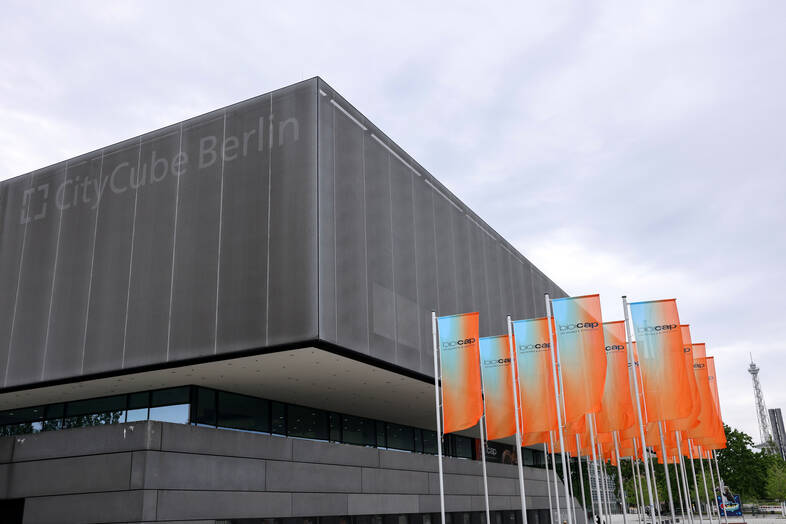
Held at CityCube Berlin from June 9 to 11, 2026, the bio:cap – Life Science and AI Investival brought together start-ups, researchers, investors, established companies and policymakers. The program combined an investor forum, innovation platform and networking event, with IBB, IBB Ventures and ILB among its partners. The next edition will take place on June 29 and 30, 2027.
The event reflects a central requirement of life science financing: scientific excellence, clinical relevance, intellectual property, industrial partnerships and capital must be considered together. The German Spin-off Framework follows the same principle. Supported by leading research institutions and venture-capital investors, it seeks to make negotiations on intellectual property, licensing and equity participation more transparent and predictable. This can shorten the path from academic research to company formation. Another example of investment in Berlin's life sciences ecosystem is Riverside Labs, a new research and production facility in Berlin-Mitte. With an investment volume of around €200 million, the development will house the Berlin Center for Gene and Cell Therapies, including a start-up incubator and GMP manufacturing infrastructure, and the Bayer Co.Lab. In addition, new laboratory developments such as FUBIC and CHARLOTTE demonstrate the region's continued investment in life science infrastructure, expanding the supply of modern laboratory space for growing companies and addressing a challenge that international investors have often associated with Berlin.
Voices from the Ecosystem
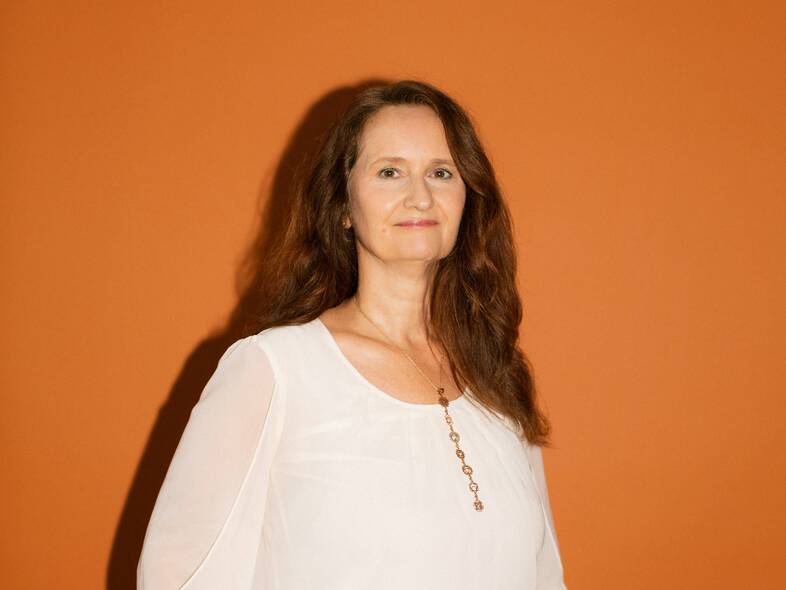
Ute Mercker, Investment Director, IBB Venture:
“Berlin offers a unique research environment, pharmaceutical partners with production sites, and – with Charité and Vivantes – is home to the largest hospital complex in Germany. This provides an excellent breeding ground for spin-offs and provides opportunities for Scale-ups as well as investors! The start-up ecosystem benefits from the new standard for IP transfer by universities – initiated, amongst others, by IBB Ventures – as well as new networking opportunities such as bio:cap.”

Oliver Höppner, CEO Ascléa GmbH:
“With our latest round of fundraising, Ascléa is now in a position to realise its vision of making its AI-based solutions available to hospitals internationally and enabling them to use large language models and agent-based AI safely in day-to-day clinical practice. The regional ecosystem played a key role in this regard, both in terms of the development of our products and our associated partners, and in terms of access to the funding market.”

