


Special Topic | Reshaping healthcare with artificial intelligence
This article is part of the Life Sciences Report Berlin Brandenburg 2026/2027. The full report can be found HERE.
A strong foundation for AI in medicine

Medical AI in the region draws on the close proximity of research, clinical expertise and technology development. This research infrastructure continues to expand. Charité – Universitätsmedizin Berlin established the Institute for Artificial Intelligence in Medicine (IKIM) in 2025. IKIM aims to bring together AI activities across prevention, diagnosis, treatment and follow-up, with a focus on transferring reliable AI into clinical practice (see “Future projects”).
At the Max Delbrück Center, the Center for AI-Accelerated Molecular Innovations in Medicine (AI²M) is adding substantial research capacity. The center, backed by €30.8 million from the Helmholtz Association, will develop AI-driven approaches for precision treatment and prevention. Its researchers will use AI to analyze large-scale molecular and clinical datasets, including data from population studies. Two hubs in Berlin-Mitte and Berlin-Buch are planned, with construction set to begin in 2026.
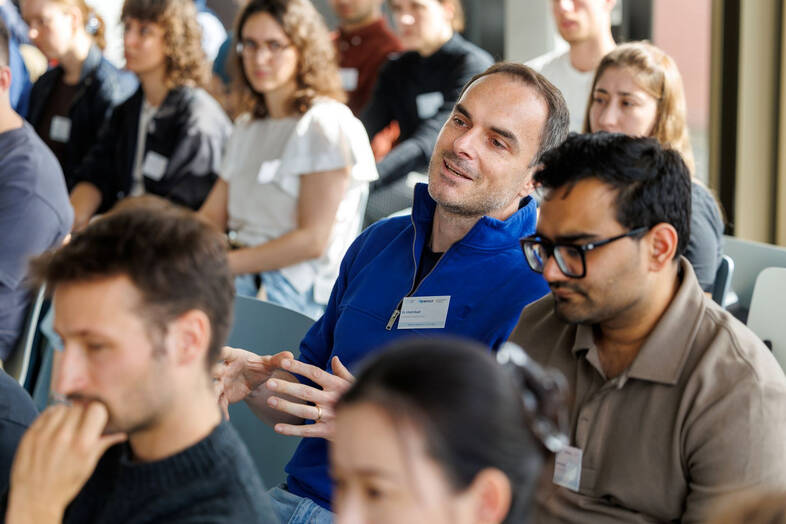
The Hasso Plattner Institute is also expanding its expertise in digital health. In November 2025, Georg Kaissis took up a professorship in Digital Health: Human-Centered Transformative AI. His research focuses on multimodal AI systems that integrate medical imaging, clinical findings, genomics and population health data. One of the key aims is to develop trustworthy systems in which AI supports clinical decision-making instead of replacing it.
Berlin’s broader research infrastructure includes the Berlin Institute for the Foundations of Learning and Data (BIFOLD), based at Technische Universität Berlin, with Charité as its institutional partner. BIFOLD conducts research in machine learning and big data management, including clinical decision support and healthcare data science. The Charité Lab for Artificial Intelligence in Medicine (CLAIM) focuses on AI for medical decision-making, and the Robert Koch Institute’s Center for Artificial Intelligence in Public Health Research (ZKI-PH) extends the application to public health.
From biological insight to drug development
Beyond academic research, several companies based in the capital region are applying AI in the early stages of therapeutic development. The technology helps design therapeutic candidates and inform decisions about which targets or molecules should advance through the development pipeline.
Epsilico uses generative AI and geometric deep learning to develop therapeutic proteins against difficult targets such as G protein-coupled receptors, ion channels and transporters. Pheiron takes a different approach. Its applied AI models are designed to quantify biological risk and identify drug programs with a higher probability of translating successfully into humans.
Supporting diagnosis and care
Closer to clinical practice, regional companies are developing AI for medical imaging, pathology, monitoring and decision support. Charité spin-off Aignostics develops AI tools for digital pathology, analyzing tissue images and associated biomedical data for drug discovery, clinical research and precision medicine. Other Berlin companies address specific diagnostic needs. mediaire develops AI-based tools to support radiologists in the assessment of MRI scans, while the MX Healthcare platform Vara AI applies AI to mammography.
Noah Labs uses AI for the remote monitoring of people suffering from cardiovascular disease. Its Ark platform analyzes data from connected medical devices. The company is clinically investigating voice analysis as a potential early biomarker for heart failure.
Another group of applications addresses the organizational and documentation workload surrounding patient care. Aiomics combines existing case documents, voice notes and patient information to support documentation and workflow coordination in hospitals, thereby reducing the burden on healthcare staff. Voize enables nurses to create documentation through speech, directly on a smartphone and without continuous internet access. In 2025, the company raised $50 million for its AI voice assistant for medical staff. Radiant Science develops voice agents for healthcare providers that answer calls, schedule appointments and transfer information into clinic calendars and electronic health records.
Enabling safe, practical use
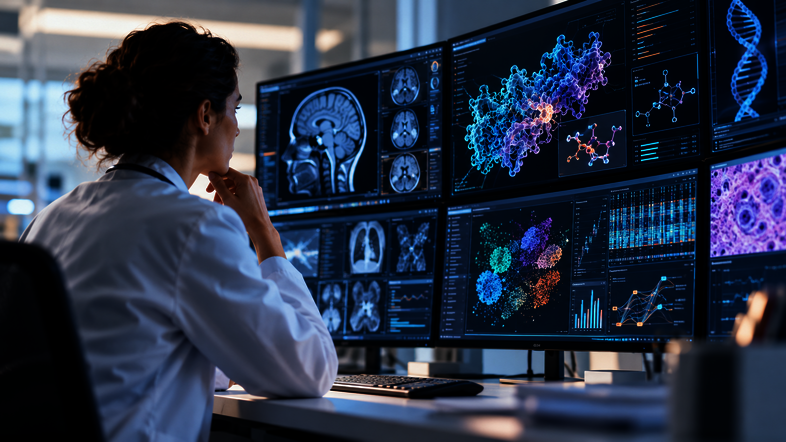
Across these different applications, the path from a functioning AI model to practical use in healthcare involves more than technological performance. Access to suitable and reliable data, interoperability, validation, regulatory requirements and integration into clinical workflows all influence whether an application moves from development into practice.
At the Berlin Institute of Health at Charité (BIH), Prof. Sylvia Thun and her research group on Digital Medicine and Interoperability are addressing a fundamental part of this challenge: making sure that health data from different sources are structured, exchanged and reused through common standards and terminologies. Working with hospitals, research institutions, industry and policymakers, the group develops and tests interoperability and documentation solutions based on international standards. This work provides part of the data infrastructure on which medical AI development and implementation depend.
Alongside these data foundations, the region is also developing structures to test and validate AI applications and support their translation into everyday care. TEF-Health provides infrastructure for testing AI and robotics in real and simulated clinical environments and supports developers as they address technical, regulatory and market-access requirements in Europe. Healthcare environments are equally important. The BIH Charité ARC Innovation Center (BCAIC) brings together clinical expertise, research and technology development to co-create and test innovations in healthcare settings. The Berliner Simulations- und Trainingszentrum (BeST) at Charité adds simulation-based training and a translation, innovation and creativity network (BeST-TrIK) that links industry with clinical contexts and expertise.
Together, these structures address key requirements for translating medical AI into practice, from interoperable data and testing to regulatory preparation and integration into clinical settings.
Voices from the Ecosystem
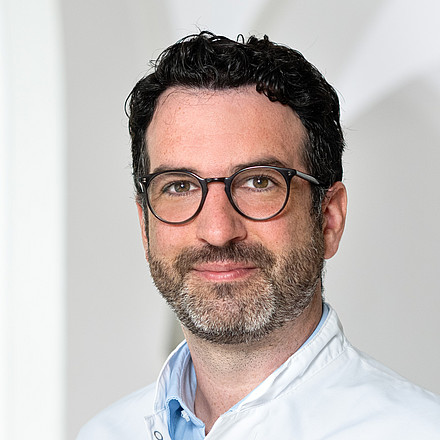
Prof. Alexander Meyer, Director of the Institute for Artificial Intelligence in Medicine (IKIM); Chief Medical Information Officer of the German Heart Center, Charité
"As the overarching goal of the Institute for Artificial Intelligence in Medicine, I see the IKIM generating real added value at Charité in both research and application, enabling us to implement AI in medicine efficiently. In particular, we are focusing on the application of foundation models and agentic AI systems. Over the next four years, such systems may be able to interact with clinical systems in a semi-autonomous or even autonomous manner and, in some cases, make decisions independently. Naturally, we also want to involve industry in this process."

Prof. Klaus-Robert Müller, Director of the Berlin Institute for the Foundations of Learning and Data (BIFOLD)
"Berlin has a number of internationally recognised big data and machine learning research groups that already have many years of experience and with which we cooperate successfully. In addition, many other interdisciplinary research institutions and think tanks are based in Berlin, which can stimulate and complement each other. BIFOLD and its institutional partner Charité together with the strong AI ecosystem of the region are increasingly translating cutting-edge research into medical applications that can improve healthcare and patient outcomes."
AI across the healthcare value chain
Examples are selective and represent different stages of research, development, validation and implementation. Some players are active across more than one stage. Not all applications are already in routine clinical use.
| Stage | How AI contributes | Selected examples |
|---|---|---|
| Basic research and data science | Analysis of biomedical, molecular and clinical data; drug discovery and modeling | Berlin Institute for the Foundations of Learning and Data (BIFOLD) at Technische Universität Berlin BIH ailslab data4life German Research Center for Artificial Intelligence (DFKI) Labor Berlin Zuse Institute Berlin (ZIB) |
| Drug discovery and development | Target identification, virtual screening, molecular design, biomarker discovery and patient stratification | Center for AI-Accelerated Molecular Innovations in Medicine (MDC) Epsilico Pheiron Phinomics Provolut Lucid Genomics |
| Diagnostics | Imaging analytics and interpretation of lab data | Aignostics Charité Lab for Artificial Intelligence in Medicine (CLAIM), Charité – Universitätsmedizin Berlin dentalXrai Fraunhofer Center for Digital Diagnostics Institute of Medical Informatics (IMI), Charité – Universitätsmedizin Berlin LIMAA Technologies Magnosco |
| Clinical applications and medical technology | Clinical decision support, risk prediction, monitoring and intelligent medical devices | Amboss Institute for Artificial Intelligence in Medicine (IKIM), Charité – Universitätsmedizin Berlin Mediaire Nia Health Noah Labs Sphaira Vara |
| Care and public health | Documentation, workflow automation, assistive systems; population health surveillance and prevention | Ascléa Centre for Artificial Intelligence in Public Health Research (ZKI-PH) Doctolib Medical University Lausitz – Carl Thiem nextOR NurseIT Institute Oracle Health Recare Samedi voize |
| Validation, testing and implementation | Clinical validation, experimentation and evidence generation | Berliner Simulations- und Trainingszentrum (BeST) Charité BIH ARC Innovation Center (CBAIC) maia – Center for Applied AI in Medicine MediCoRE TEF-Health |
Turning AI’s promise into medical impact
Turning the possibilities of Artificial Intelligence into real improvements will depend on more than better algorithms. A handful of key factors will decide whether AI innovations become reliable tools in research, diagnostics and everyday care.
- High-quality health data
- Strong data protection and security
- Powerful digital infrastructure
- Interoperable systems and interfaces
- Regulatory clarity and validation support
Highlight projects
TEF-Health
The Testing and Experimentation Facility for Health AI and Robotics (TEF-Health) provides a single-entry point to extensive tests on health AI and robotics solutions within real or realistic environments. It brings together 52 partners, including top hospitals such as Charité, research institutes, and certification experts. This pan-European initiative supports the safe, effective and trustworthy introduction of AI and robotics in healthcare. Its scope of services ranges from software for diagnostics and patient care to intelligent robotic systems for surgery and nursing, as well as access to data. By enabling technologies to be tested under realistic conditions, the infrastructure is designed to accelerate certification processes, support regulatory compliance and facilitate market access across Europe.
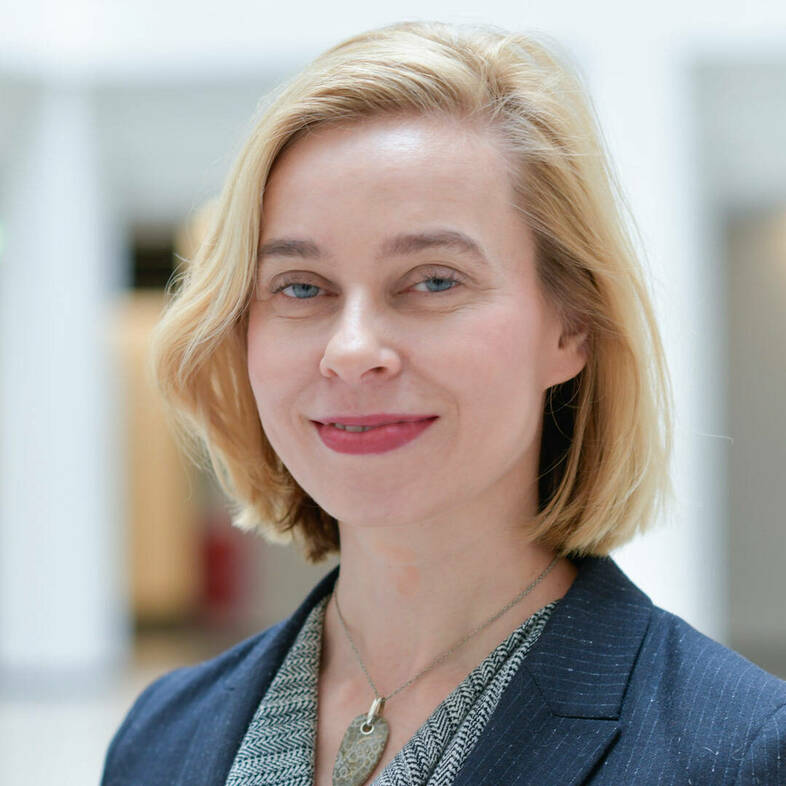
Prof. Dr. Petra Ritter, coordinator of TEF-Health and Head of the “Brain Simulation Section” at the Berlin Institute of Health (BIH) at Charité – Universitätsmedizin Berlin
“With TEF-Health, we want to help ensure that the digital transformation in the healthcare sector is secure and transparent.”
ai.berlin hub
The ai.berlin hub is a physical community space for Berlin's AI ecosystem. It brings together companies, research institutions, startups and other organizations to exchange ideas, build connections and work together. The hub is part of a growing technology and innovation cluster at the CIC Berlin campus, alongside the neighboring Deep Tech Hub Berlin. From this location, the ai.berlin team works with partners across the city's AI ecosystem and organizes meetings, events and delegations, creating a central point of contact for Berlin's diverse and geographically dispersed AI community. The hub also serves as a venue for events, workshops, consultation sessions and networking formats.
Future project
Institute for Artificial Intelligence in Medicine (IKIM)
The Institute for Artificial Intelligence in Medicine (IKIM) at Charité – Universitätsmedizin Berlin was founded to integrate AI solutions into healthcare, generate evidence on their clinical benefit, and embed them in everyday clinical practice. Led by founding director Professor Alexander Meyer, the institute’s work covers fundamental AI research, development of clinical applications and structured testing in patient care. In close cooperation with the Berlin Institute for the Foundations of Learning and Data (BIFOLD), IKIM develops new AI methods and translates them into applications for medicine and clinical practice. A dedicated service unit supports researchers and clinicians on AI projects. The institute also develops curricula for medical education and continuing education programs to anchor AI competencies in healthcare professionals. The institute is based at Campus Virchow-Klinikum.

